Visiting Napa/Noma in August

There’s no getting around the fact that Napa/Noma in August is hot.  The average temperature in Santa Rosa is 82o, which many people would not consider too difficult to take.  But beware of the law of averages.  Nighttimes cool off quite a bit in Napa and Sonoma counties and the mornings can be foggy, humid and almost chilly even in mid-summer.  But when the clouds lift in the middle of the morning – the time you will likely be setting off to visit wineries – and into the afternoon, the temperatures usually reach into the 90’s and by 3:00 it’s not unusual to have the heat break over the 100o mark.

Now tastes in weather differ.  If you’re an Arizonan, these temperatures don’t sound too scary.  But if you’re a Canadian, for example, even the average daily temperature in August seems pretty hot to you.  So why go wine tasting in Napa/Noma in summery August?

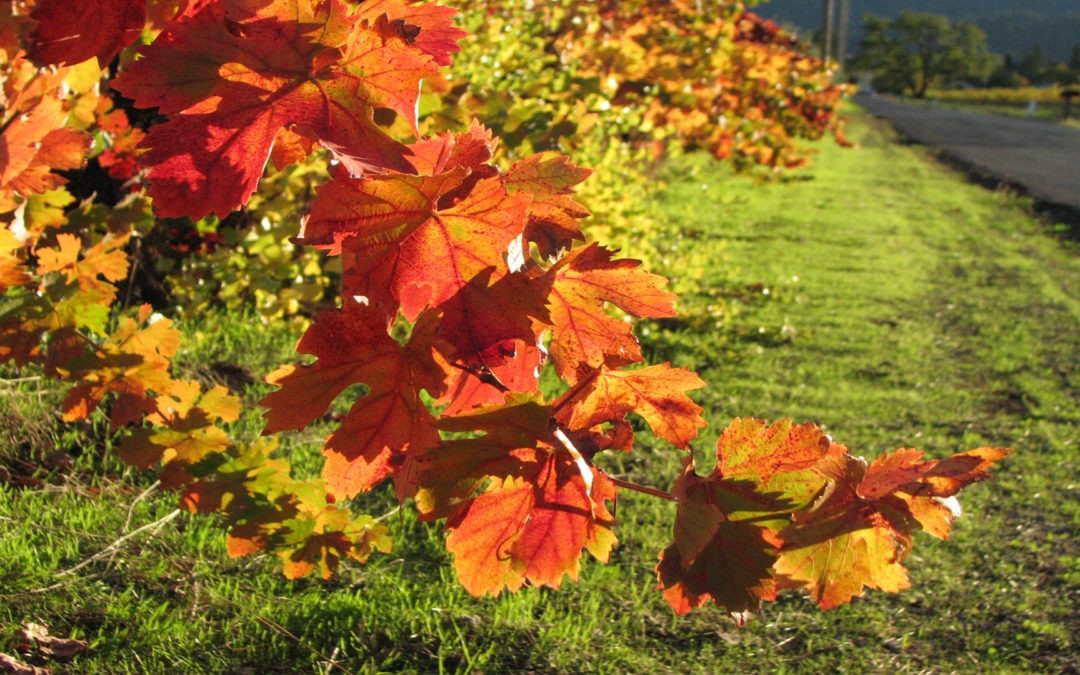
Photo courtesy of medium.com

Perhaps the best reason is that August is the beginning of the harvest in this area.  Sauvignon Blanc is usually the first grape to ripen, with Chardonnay coming after that towards the end of the month.  The whole year in the vineyards has been leading up to this time, and there’s a burst of energy that even visitors can feel among the growers, the harvesters and the production line personnel actually turning the crop into wine.  It’s really fun to see.

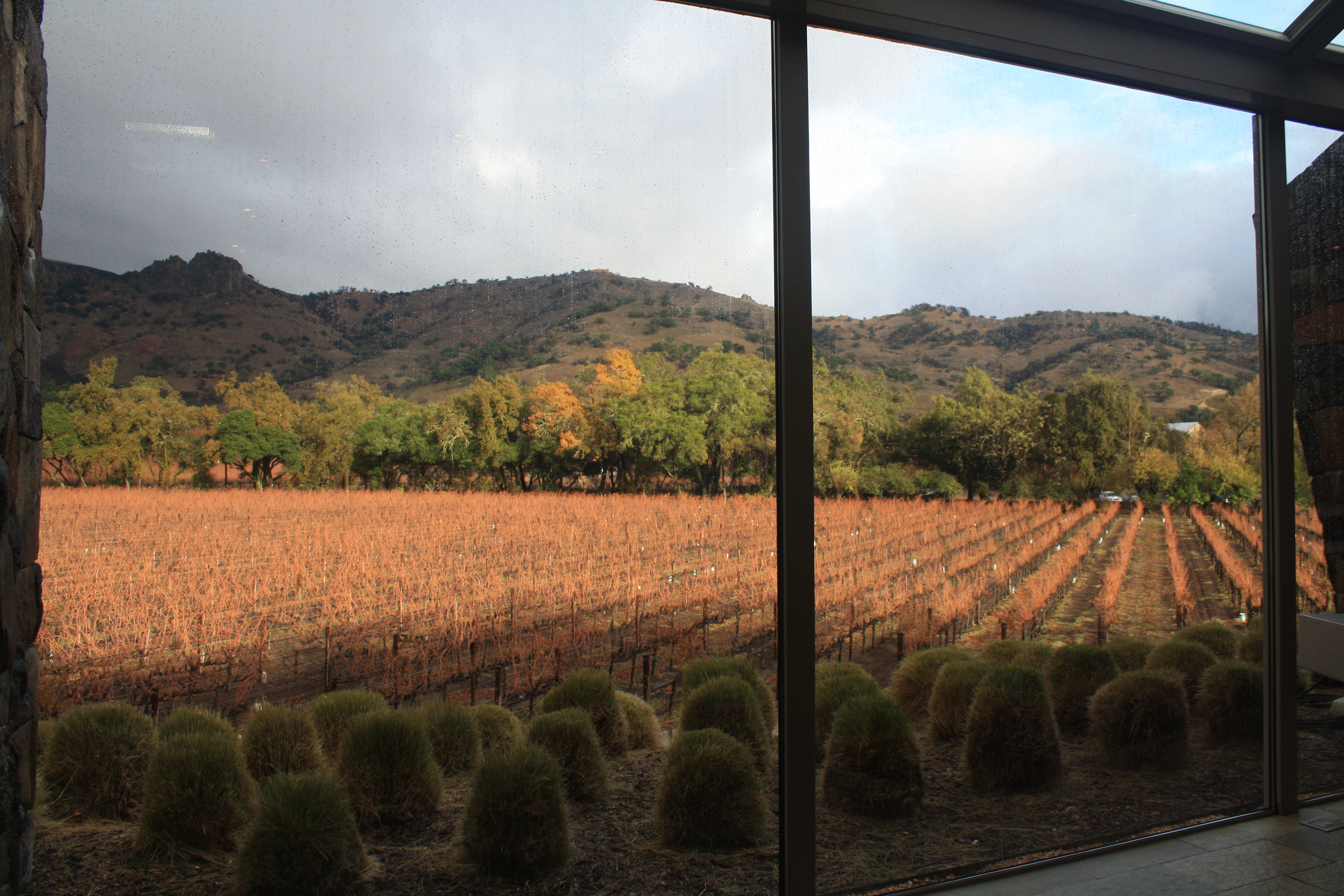
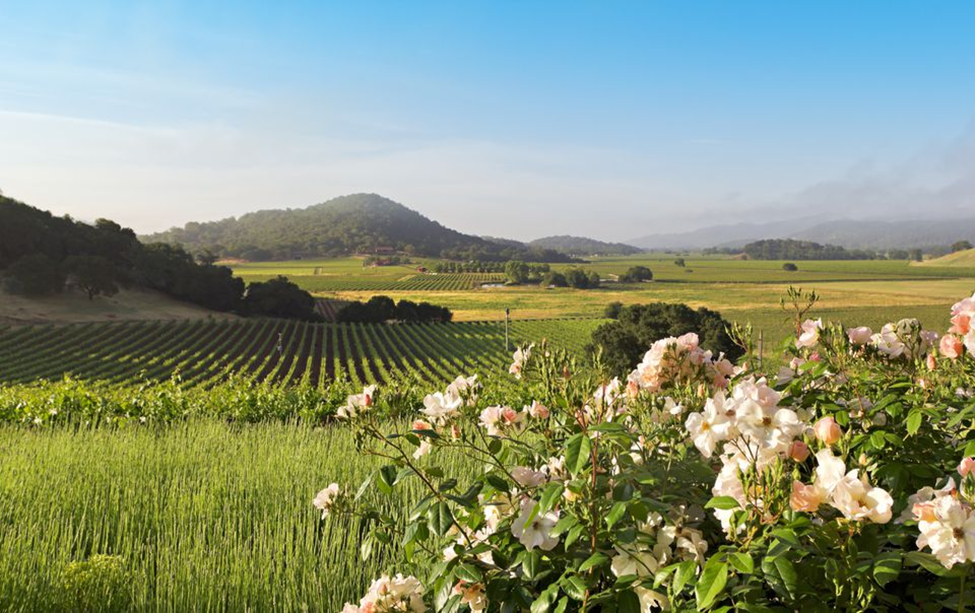
Moreover, the vines are heavy with fruit, both white and red.  Yes, it’s interesting to see the bare branches of winter and the bud break of spring, but there’s nothing like seeing a vineyard with nearly ripened clusters of grapes just waiting to be harvested.  Power Tasting has said many times that one of the premier reasons to visit Wine Country, after the tastings, is to revel in the beauty of the vineyards.  And they are never so beautiful as when they are laden with grapes.

Another benefit of Napa/Noma is August is that it is not only grapes that are in season at this time.  California is America’s fruit basket and peaches, plums, strawberries, mangoes and much more can be found in the markets.  Between the wine grapes and the rest of the produce, you really do feel the bounteousness of Nature.

For many people, August is vacation time, so it can get crowded in Napa/Noma in August.  But a lot of those vacationers have their children with them and Wine Country really isn’t for kids.  Nonetheless, you will encounter many tasters with little ones in tow, from infants to teenagers.  Sorry to say, they do detract from the wine tasting experience a bit.

Again because there are so many people who enjoy wine tasting nowadays, there can be a lot of traffic.  There’s no gainsaying the many wonderful wineries along Napa Valley’s Route 29, which gets the most crowded.  Don’t avoid it, but do give some thought to when and where you intend to taste.  You want to be in the tasting rooms, not behind the wheel.  And again, weekends are always more crowded than weekdays.  You’ll find that the back roads of Russian River or the crossing roads at the center of Napa Valley are a little less traveled while at the same time a good deal cooler.

Don’t hesitate to visit Napa/Noma in August.  Take advantage of the best there and be forewarned about some of the drawbacks.

First Time in the Hunter Valley

A long time ago, Steve made a trip to the Hunter Valley in Australia where he had his first experience in wine tasting in that country.  How long ago?  So long that most of the world had not yet learned that Australia was producing wines of high quality.  Penfold’s Grange and Henschke’s Hill of Grace were each US$25 at that time; today they’re around US$840 at one of the better wine stores in New York.  Even considering inflation, these wines are no longer the bargains they were then.

The Hunter Valley is a drive up the coast from Sydney to the town of Pokolbin.  As in many big cities, the stars were difficult to see at night in Sydney, but out in Wine Country, the sky was ablaze with them.  You can see the Southern Cross in the darkness of a country night.  Frankly, it’s a bit disappointing.  It’s a nice constellation, but so is the Big Dipper (which is easier for us Northern Hemispherians to find).

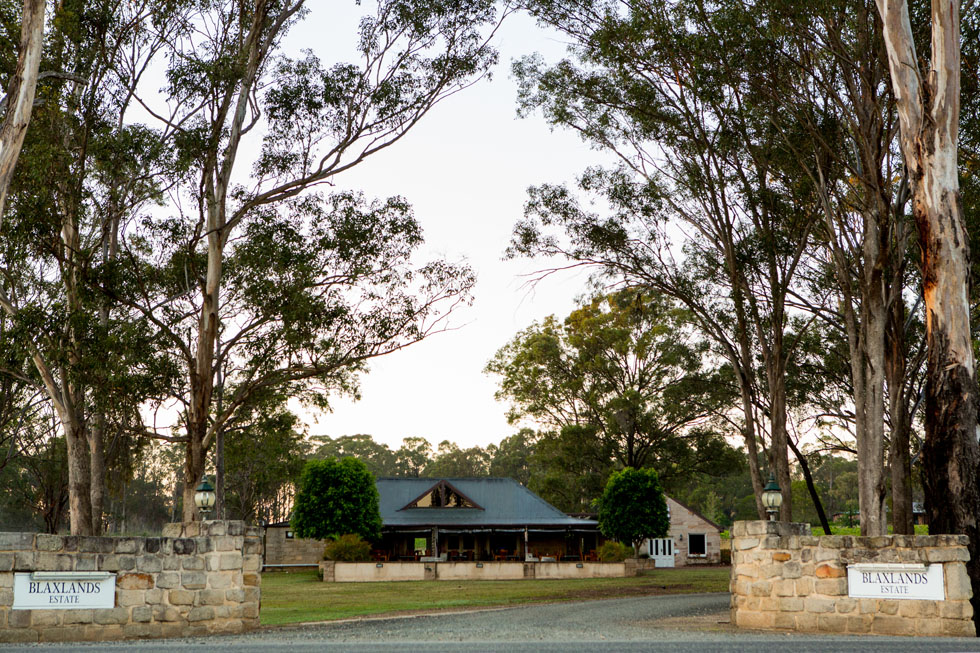
Blaxland Inn, Pokolbin.  Photo courtesy the restaurant.

Across from the hotel, there was a restaurant called Blaxland Barn, today known as the Blaxland Inn.  Sitting down at the table, the hostess asked if he wanted a damper.  Hmmm, what’s a damper?  It’s an iconic Australian bread, somewhat like Irish soda bread, associated with swagmen in the Outback.  And what’s a swagman?  He’s an itinerant farm worker or in some cases what we would call a hobo.  If you’ve ever heard Waltzing Matilda, you know all about swagmen.

When it came to ordering wine with dinner, everything on the list was simply an unknown name.  So the hostess was asked to help.  She hemmed and hawed a bit and then said, “Well (pronounced wail in those quarters) there is one but it’s a bit dear.  Oh, but not for you.”  She must have figured that anyone who could afford to travel to the Hunter Valley all the way from America could afford ten Aussie bucks for a bottle of wine.  That’s what prices were like in those days.  It was a Tulloch Shiraz and it was exceptional.

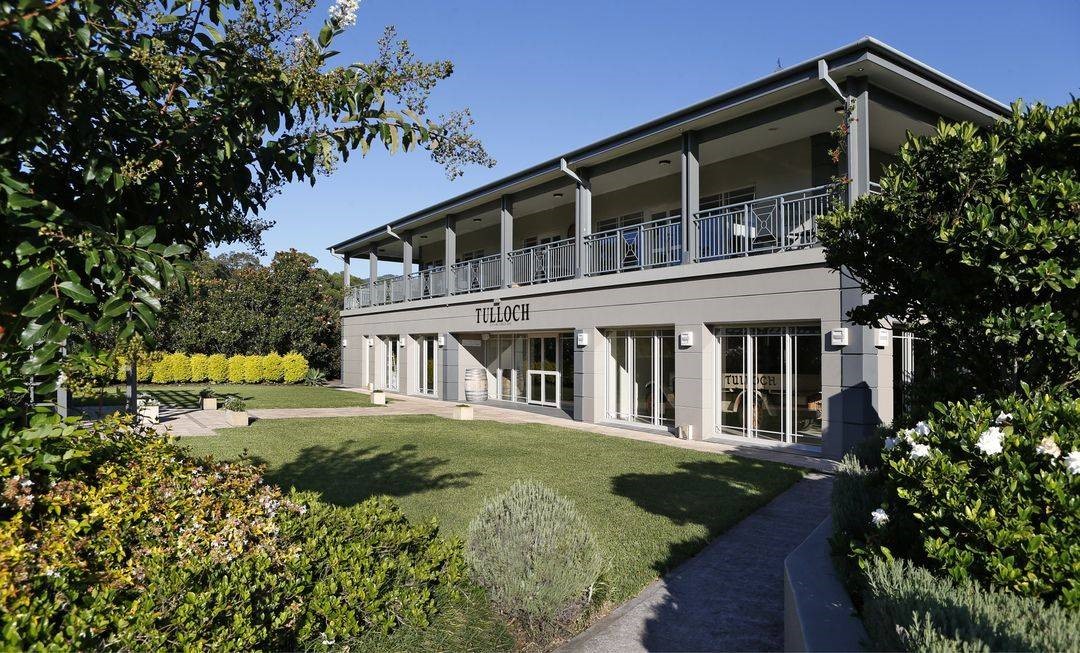
Tulloch winery today, not at all what it was back then.  Photo courtesy of vineyard.com.

The next day the serious wine tasting began, starting with Tulloch’s.  Other wineries visited included Tyrell’s and Lindeman’s.  It’s hard to tell after all this time whether these were top places to go or just the ones known about at the time.  But the welcome that an American wine enthusiast received was wonderful.  Servers opened all sorts of bottles, pouring out verticals and horizontals all day.

There are a few lessons to be learned, even if you never visit Australia and if you will not be as surprised to find high-quality wine there.  Just get used to the fact that you’re a babe in the woods regarding these wines unknown to you and let your hosts (and you nose and tongue) be your guides.  This bit of advice applies whenever you visit someplace you’ve never been before, trying wines you’ve never heard of.  Sure, sometimes you’ll be disappointed.  But just as often, you’ll have the chance for wonderful discoveries.

The Windsor Certified Farmers Market

We first discovered the town of Windsor when we sought out a restaurant that used to be there, called Mirepoix.  It was quite good in its day, but as with many businesses, their dreams of expansion led to its closing.  As far as we could tell, there was no particular reason to return to this little village without that restaurant being there.

That doesn’t apply to the wineries in the geographic area designated as Windsor.  As with the rest of Sonoma County, the towns incorporate huge swaths of land surrounding a market town, such as Sebastopol, Santa Rosa or Healdsburg.  The town leaders have painted the houses in pastel colors giving the downtown area an Americana charm or a Universal Studios glitz, depending on your tastes.  As mentioned, there are no renowned restaurants, no hotels except some motels along the Route 101 highway.  Windsor seems to be a place that you pass through on your way to somewhere else.

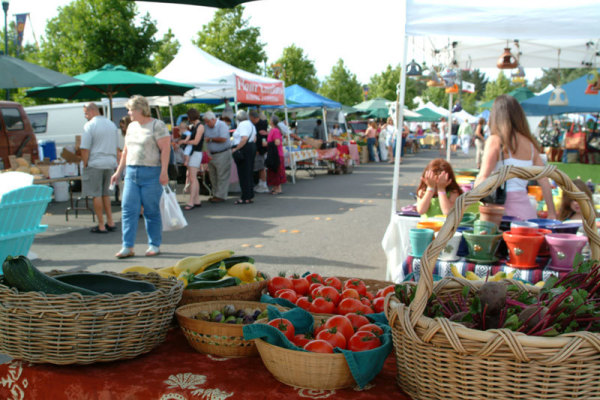
Photo courtesy of Sonoma County Tourism

Except if you happen to be there on a Sunday morning or a Thursday evening in growing season.  Then on the Town Green in the middle of Windsor you’ll find an extensive farmers market.  We had stopped one Sunday for some breakfast before wine tasting and wound up spending several enjoyable hours there instead.  When you’re in California Wine Country, you always need to be aware that there are many farmers who grow crops other than grapes.  And the same natural forces that foster fabulous grapes do the same for melons, squash, peppers, peaches, apples, strawberries…

This is the Windsor Certified Farmers Market.  We have no idea who has certified it nor for what.  It is as close to a French marché as anything we’ve seen in the United States.  And much as at those marchés, there are numerous artisans with stands at the Windsor market.  You’ll find cheeses, home-made pickles, beeswax candles, macramé, hanging glass amulets…all the hippy-dippy stuff you’d expect at a California market.

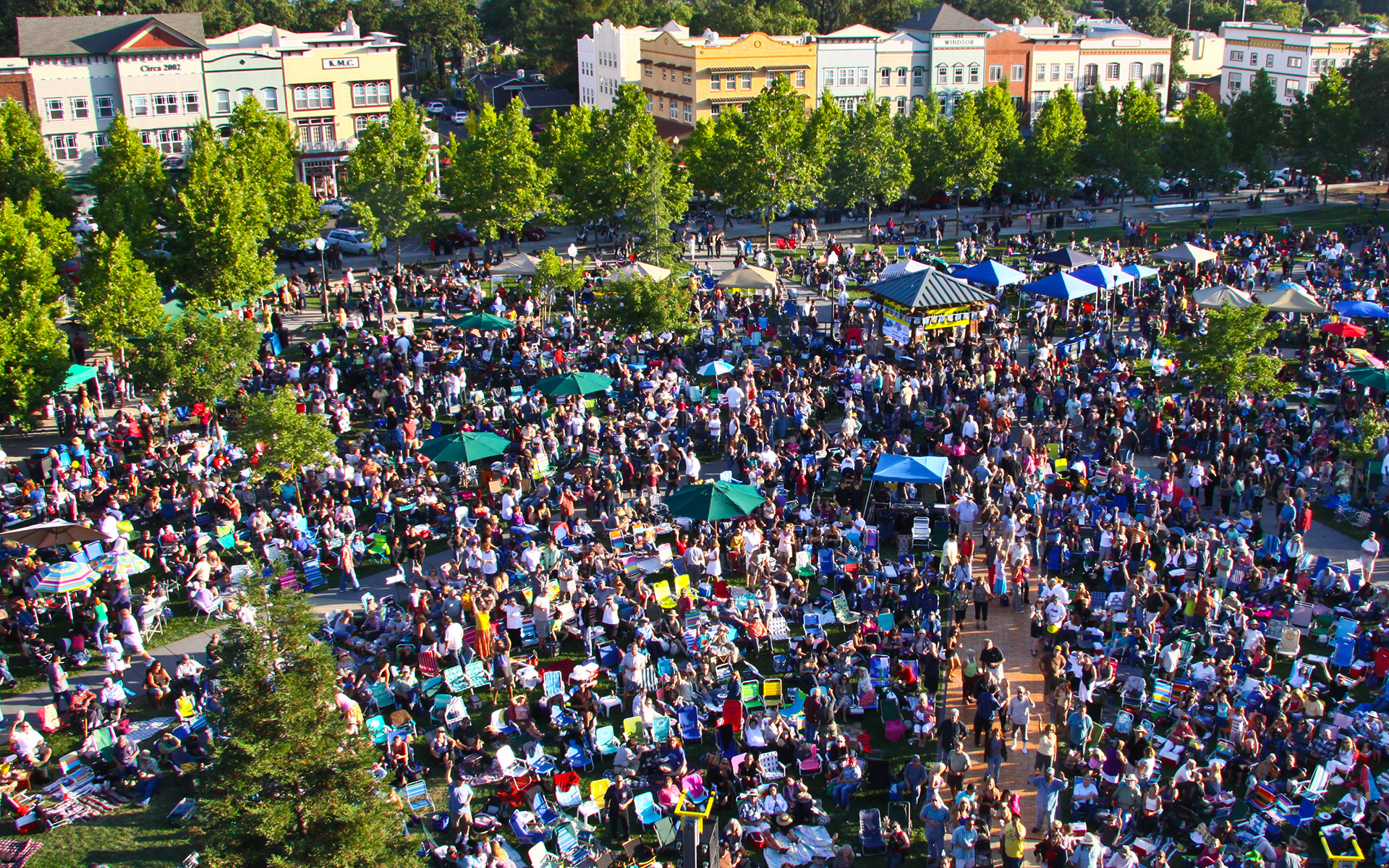
A Summer Night on the Green in Windsor.  (Note the painted buildings in the background.) Photo courtesy of windsorfarmersmarket.com.

There’s usually a musical stage at the Sunday markets and from the end of May through Labor Day there are Summer Nights on the Green concerts during the Thursday markets.  The latter are mostly rock, country and Latin which may or may not appeal to you.

We can almost hear you thinking. “I’ve got a great farmers market at home.  I don’t need to go to Wine Country for this.”  Now, there’s something to be said for the superiority of California fruit but we’re sure that your local farmers raise delicious produce as well.  That’s not the reason to go to the Windsor Certified Farmers Market.  This is your chance to rub shoulders with the local populace, many of whom are the same people who raise and harvest the grapes and make the wine that you did come to Wine Country for.  In keeping with the same spirit that failed to support a fancy French restaurant, this market is intended to attract the neighbors, not the tourists.

An important reason to travel for wine tasting is that you learn about more than what comes in the bottle.  You learn about the whole culture that produced that wine, very much including the people and their customs.  That’s true in France, Spain, Italy and the US as well.  So take a little time when you’re in Sonoma County and come to Windsor to meet the folks.

Napa Valley at Night

Most people who think of spending time in Wine Country visualize it in daylight.  That’s when the wineries are open for tasting and when the sunshine kisses the vines and makes the grapes grow.  If you are going to spend more than a day, then you’re going to encounter at least one night there.  In most parts of Wine Country, outside the principle cities and towns, there’s nothing to see or do because, well, it’s dark.

Famed for its restaurants, Napa Valley has a nocturnal side for visitors.  One of its two main thoroughfares, Route 29, is well lit and there are attractions that are also illuminated.  The smaller roads are only lighted up by passing headlights, which also creates an atmosphere rather spookier than that experienced by day.

Sunsets can be spectacular in Napa Valley.  The wide-open spaces between the Vaca and Mayacamas mountains create a backdrop for the setting sun that can be quite dramatic.  We think there must be something in the air there that brings out the best around 5:00 in the winter and 9:00 at the height of summer.

Sunset in Carneros, from the Etude winery.

Driving north on Route 29 you’ll pass a lot of hotels and commercial establishments at the widest part.  Where the road narrows, you can see the lights of Yountville to your right.  Popular restaurants such as Brix and Mustards appear on your left not much further on.  Of course, they’re there during the day as well, but their rapid appearance out of the dark is a reminder of what were once called roadhouses, gathering spots out in the countryside with hints of racoon coats, bootleggers and late-night parties.

Mustards Grill.  Photo courtesy of the Napa Tourist Guide.

 These days, the action is to be found in the towns such as Yountville, St. Helena, Calistoga and especially Napa Town.  The first three mentioned are really just villages, with one or two commercial streets including a few restaurants.  Besides restaurants (and some very good ones) the town of Napa has the additional nighttime advantage of a beautiful walk along the river.  The town leadership has refurbished the old buildings on the southern bank and erected a promenade.  Passing down the walkway adds a very romantic after-dinner touch.

Nocturnal walks outside the towns are probably not a good idea.  For one thing there are no sidewalks, so your only path would be in the roads themselves.  Now, this is California where nobody walks if they can help it.  So you’ll be traipsing along poorly lit roads. (Did we say, “poorly lit”.  For the most part there’s no light at all.) Because most drivers aren’t expecting to see pedestrians, there’s an appreciable danger in taking a walk in the back roads.  If you are intent on doing so, wear reflective clothing.

Napa Valley is a pretty magical place, day or night.  Because daytime activities predominate, not many give consideration to seeing it by starlight.  If you’re there, enjoy it.

The walkway along the Napa River.  Photo courtesy of napawineestates.com


Visiting Napa/Noma in March

Maybe March comes in like a lion where you live, but it’s definitely lamb-like in Napa/Noma.  The US Weather Service says that the average daily temperature in Napa tops out at 67o.  There’s just enough rain to make the flowers – and the grape vines – grow.  Everything is coming alive again, and all’s well with the world. And if you travel to Napa/Noma in March you can see it and even participate in it a bit.

Bud break in March.  Photo courtesy of flickr.com.

In particular, March is the time of year in winemaking known as “bud break”.  The leaves are on the vines and the tiny buds on the vines begin to swell up and send out shoots.  The brownness of winter gives way to a light green.  The annual cycle that leads to barrels full of wine starts anew.

However, it’s not all green.  There’s a lot of yellow, too, in the form of mustard flowers, which begin to blossom in late January and reach their peak in March.  Some people think (okay, we used to think) that this was a trick that vineyard managers used to enrich the vines.  But no, it’s just because it’s pretty and vineyard managers like things to be pretty as much as tourists do.

Photo courtesy of Wine Country Inn

March is an especially good time of year for tasting the new releases from many of the best vineyards.  If you do the math, you’ll see that wines aged in barrels for 16 months from harvest (i.e., September) reach maturity at the end of January.  Allowing a month for getting it out of barrels and into bottles, you’ll have the chance to taste many of the newest wines in March.  At the same time, there will probably be many bottles left from the previous vintage at some wineries, so you’ll have the opportunity taste wines that have a little maturity to them.

With the crazy weather patterns that are typical of Napa/Noma, you may well want a winter coat in the mornings in March, as well as in the later evening.  But by midday, you’ll shuck the outerwear and visit wineries in your shirtsleeves.  Overall, it is wise either to wear a sweater or wrap it around your neck.

There are no national holidays in March, so hotel rates are a little lower than in the high summer season.  On the other hand, crowds do begin to show up on weekends, so be prepared for more crowded tasting rooms than you will find in the coldest winter months, but less so than in summer.

There is, of course, St. Patrick’s Day in March.  Napa/Noma doesn’t do it up like New York or Chicago, but there are places that celebrate rather boisterously.  One such is Hurley’s in Yountville.  Now, a hurley is the lethal instrument used to play Gaelic football, so this restaurant/bar is honor-bound to make a St. Pat’s statement.  (It’s also one of our favorite restaurants in Napa Valley.)

So see if you can find a shamrock among the mustard flowers and enjoy your time wine tasting in Napa/Noma in March.


The Side Streets of Napa Valley

If you look on a map at the winemaking area of Napa Valley, it’s shaped like a ladder.  The uprights are Route 29 and the Silverado Trail.  The rungs are the Oakville Cross, the Rutherford Cross and so on (with a few others with names like Zinfandel Lane thrown in).  When you drive along these roads, you have the opportunity to see many of the most famous wineries in the region and, in fact, of the world.  We’ve traveled that way many times and have tasted some spectacular wines.

On occasion, though, it’s a good idea to take some of the side roads. Because they are off the main drag, some of them are less visited, meaning smaller crowds and easier traffic.  On the other hand, some of Napa Valley’s most renowned wineries are to be found on these smaller roads.  For example, you can taste Joseph Phelps’ Insignia blend on Taplin Road, Caymus’ Special Selection on Conn Creek Road or Chateau Montelena’s Chardonnay, the winner of the famous Judgement of Paris, on Tubbs Lane.  All of these are perhaps a bit out of the way, but the rewards of heading there are self-evident.

We are not including among these side streets the many wonderful wineries up in the Vaca and Mayacamas mountains on either side of Napa Valley.  They too are out of the way but require a great deal more time and effort to visit them than those discussed here.  One such is the subject of the winery review in this edition.

There are other wineries established on the side streets that are well worth a visit for several different reasons.  As always, it’s a pleasure to discover wines you haven’t heard of and may very well enjoy.  However, Power Tasting is about more than just the wines; our objective is to encourage wine tasting as an overall experience.  In many cases, these out of the way wineries enhance the experience in order to attract people to their tasting rooms. They are less likely to have visitors who were just passing by, so they need to make themselves destinations.

A few examples on just one such side road make our point.  Andretti Winery (http://andrettiwinery.com/) and Monticello Vineyards (http://www.corleyfamilynapavalley.com/) are side by side on Big Ranch Road in the southern Napa Town end of the valley.  If you’ve ever even heard of motor racing, the name Mario Andretti will be familiar to you, and if you are a racing fan, you will enjoy looking at all the trophies and maybe buy a souvenir.  Mario was part of the group that founded his namesake winery, which is deliberately reminiscent of a Tuscan villa, in honor of Mr. Andretti’s heritage.  While they do make the widely encountered California wines such as Cabernet Sauvignon and Chardonnay, they are differentiated by the availability of Italian varietals including Pinot Grigio, Barbera, Dolcetto and a sweet Moscato.

The Jefferson House at Monticello Vineyards.  Photo courtesy of the winery.

Monticello has an entirely different vibe.  Instead of celebrating an Italian-American race car driver and his background, Monticello Vineyards is a tribute to America’s illustrious third President, Thomas Jefferson.  Thus, although the tasting room is also in a gracious, neoclassical building, the real gem of the property is what they call Jefferson House.  Not a true replica of the building that is imprinted on the nickel, it is nonetheless evocative of the real thing.  Unlike many of the nouveau palaces in Napa Valley, this building is beautiful enough in itself to attract visitors.  And oh, yes, you can taste wines, the usual combination of Burgundy and Bordeaux varietals that are typical of Napa Valley.

Maybe these aren’t the first choices you would make for wine tasting if you have never been to Napa Valley.  For those seeking to expand their experience of this corner of Wine Country, they are an easy trip to make.  And why would you not want to go?


Visiting Napa/Noma in July

Let’s face it: it’s hot in Napa/Noma in July.  Of course, it’s hot everywhere and if you like it that way then it’s no problem.  We are split on the matter, so while we have been there in the height of the summer, we don’t go at that time very often.  The afternoon temperatures are generally in the 90s and it’s scant consolation that in other grape growing areas further south the 100s are regularly reached.

There are other drawbacks as well.  July 4 weekend brings crowds and at this time of the year, the crowds often mean tourists with children.  The roads are jammed and in many cases so are the tasting rooms.  So why go in July?

Because the days are long.  Even though the wineries are closed by 5:00 or earlier, you still have time to laze by the pool at your hotel, visit a state park or just enjoy strolling in the pretty towns. Some wineries, especially those with a view, take advantage of the lengthy daylight and stay open later for special events.  We well remember evenings at William Hill Winery (https://www.williamhillestate.com/estate#our-winery), sitting in comfortable Adirondack chairs with a bottle of Chardonnay admiring the view in the approaching dusk.  (Of course, you have to buy their wine to take advantage of their grounds).

William Hill Estate Winery

There are some pleasures only available in the summer months.  For example, the Santa Rosa Wednesday Night Market is open from May to August and the fruits and vegetables reach their peak in July.  There’s music, barbecue and a chance to meet the locals.  July also brings music festivals in the parks in St. Helena, Calistoga and Santa Rosa. 

Santa Rosa’s Wednesday Night Market.  Photo courtesy of the Santa Rosa Press Democrat.

July can lay claim to being the month when the vineyards are at their most beautiful.  It is the month in which veraison begins, when the red wine grapes attain color.  It can be quite stunning to see the clusters of grapes – some green, some purple – giving promise of the harvest to come.  Each month has its own beauty, to be sure, but there is nothing quite like seeing the vines heavy with fruit.  Earlier in the year, there are only tiny berries.  Later, the fruit is dropped or picked.

If the temperatures are your bugaboo, take advantage in July to go wine tasting in the cooler, higher elevations.  A case can be made for the quality of mountain wines over those made from fruit grown in the valleys, so taste up there and avoid the highest temperatures.  We remember a summer tasting at Storybook Mountain Vineyards (https://www.storybookwines.com/), in the very north of Napa Valley, when we were positively shivering in their caves.

If you do visit Napa/Noma in July, you’ll enjoy wine tasting most if you go on weekdays and make appointments for tastings on the weekends.  You’ll also get a better price in some hotels on weekdays, but prices will still be high compared with those in winter months.  Heat notwithstanding, there are many pleasures to be had in Napa/Noma in July.

Great Experience; So-So Wine

It is Power Tasting’s policy not to give bad reviews of any wineries.  We feel that there are so many wonderful wines and so many owners who do their best to make their visitors feel welcome that there is no need for negativism.  If we feel that a particular winery makes poor wine, the less said the better.  But Power Tasting is about the experience of wine tasting as a whole: the architecture, ambiance, scenery and décor as well as the wines themselves.

We are not arrogant enough to think that we have the last word on the quality of wines; if a winery is in business, someone must like what they sell.  There are some wineries where we are not crazy about the wines but find the overall experience to be pleasurable.

If we had all the time in the world to go wine tasting and an infinite capacity to imbibe alcohol, we could just visit tasting room after tasting room without a care.  But our time in Wine Country is limited and precious and, as with everyone, we need to be cautious about how much we drink, even if we are only sipping.  So it becomes a question of how we treat those establishments where we don’t appreciate the wines but do enjoy all the rest.

Certain places come to mind, although we will not mention names.  There is one in Napa Valley decorated with fine antiques, with a large fireplace and comfortable sofas and chairs.  It would be the library of our dreams, the kind of place where we would sit with a vin de méditation and read great literature.  But we don’t like the wine.

There is another in the southwest of France, high up on a hill with a grand castle and magnificent views over the valley.  It is out of the way and hard to find, so it is never busy.  We could easily fantasize that it was ours, where we would host grand dinners in the garden, overlooking the vines.  But we don’t like the wine.

Another example is a fine old Long Island mansion with “good bones” as the realtors would have it.  It is quite historic in the North Fork’s brief history.  There seem to be concerts and weddings there every weekend.  But we don’t like the wine.

So what to say about these places?  We know about them because we visited them without having any idea of what we would find.  Even though we were disappointed in the wines we tasted, we took some enjoyment from our visits.  We often urge visitors in a section of Wine Country they have never visited to do their homework and learn about the better wineries before they go, but it’s not a bad idea to take a chance every once in a while.  We have made some great discoveries that way.

Even if you are not enjoying the wine you’re being served, take advantage of the aspects of the building and the tasting room that you do like.  Carry your glass with you and look around and soak up the pleasures that that winery offers you.  There’s a great chance you’ll never pass this way again, so enjoy it while you’re there.

Tasting in the Languedoc

Languedoc is in the southwest of France.  Until the 13th century, it was considered as a separate entity, Occitania, home of the troubadours, easy living and rich food.  There are no more troubadours, but the rest remains.  It is today the part of France with the greatest production of wine grapes.  The wine producing area is very large, stretching along the Mediterranean coast from the west of the Côtes du Rhône to the Spanish border and inland, at its furthest extreme, beyond Carcassonne.

Wine has been made here since this area was colonized by the Greeks.  Today, for the most part, the grapes grown here are of the Rhône variety: Syrah, Grenache, Mourvèdre, Cinsault and Carignan in red; Marsanne, Rousanne and Viognier in white.  There are more than 30 sub-regions recognized as AOCs (Appellations d’Origine Contrôlée), which are much the same as AVAs in the United States.  There are even more sub-sub-regions, called Indications Géographique Protégée, which are not quite as well recognized but may still make some excellent wines.

Sadly there was a time, not that long ago, when wines from the Languedoc were rough, alcoholic, sour and for some people, better used for cooking than drinking.  We are pleased to say that this is no longer the case.  The reason, as we see it, is the advent of organic winemaking in the last 10 to 15 years.  Referred to as bio by the French, it has sparked a revolution in Languedoc wines.  It may be attention to detail, more intense vinification techniques, stainless steel tanks or just plain cleanliness but the wines of the Languedoc today have little to do with the past.

Now, so we have found, there are many excellent wines to be had in red, white and pink.  And the prices are not to be believed.  For example, we have been drinking a rosé that Lucie in particular has enjoyed (Domaine l’Espinel) that costs less than five euros ($6).  There are some really interesting reds and whites for which the top  price we have seen is around 25 euros ($30).  Perhaps none of them are enough to make the great Chateauneuf du Papes worry, but they are really fine wines, full of complexity and depth and ready to drink now.  We think they will age well, but they may in fact be at their peak in a few years after harvest.

The wine tasting experience is a revelation.  The wineries are not crowded.  In fact in September, at the time of our visits, there have been no others sharing the tasting rooms with us.  And every winery seems to make eight to ten wines and the server wants you to try them all.  It does help to speak French, but we have found that all the servers are eager to try out their English.  Plus, most of them do not charge for tasting.

The Languedoc is sunbaked and can be quite warm, especially in the summer months.  Of course, this produces wines that are particularly flavorsome.  It is not California, with wineries lined up on highways.  No, on the contrary, you may have to drive around, get a little lost, and find wineries spaced out rather distant from each other even within AOC regions.  On the other hand, you are likely to make discoveries that you will remember warmly and search for in wine stores for years to come.  We have found that, for the most part, only the lowest quality wines on any vineyard’s list are the ones exported to North America so a wine tasting trip is likely to open your eyes – and your nose and tongue – to some delightful new experiences.

Impressions of South African Wine Tasting

Only one of us has been wine tasting in South Africa and Steve was only there briefly, so we can’t offer much in the way of recommendations or meaningful reviews.  So this will be about the experience, rather than the wines, which is what Power Tasting is all about.

Steve was in Cape Town on business and gave himself the weekend to overcome the jet lag.  He found himself alone, 8,000 miles from home and that Sunday was his birthday.  So to shake the blues he went wine tasting.

Fortunately, the best known winemaking areas in South Africa are quite near to Cape Town.  Stellenbosch, Paarl and Franschhoek are less than an hour’s drive from downtown.  Unfortunately, Steve had no car, no idea of where to go and besides they drive on the wrong side of the road there.  Then and now, the American dollar goes pretty far in South Africa, so Steve found a taxi and hired it for the day.

Nederburg Winery, with dining tables outside.  Photo courtesy of Spice4Life.

The taxi driver was no wine enthusiast and had no particular idea where he was going, either.  Steve had read up on South African wines and had a few wineries in mind for a visit.  He was lucky that they were fairly close to one another: Meerlust, Nederburg and Spier were on his list.  Amazingly quickly, Steve was seeing grape vines out the taxi window and in a half an hour he had arrived at Spier.

One thing he quickly learned was that they don’t call them vineyards but rather “wine farms” which, when you think about it, makes a lot of sense.  The second thing he learned is that South Africa has a significant wine history.  In the 19th century, it was a world-class producer; the Constantia wine estate grew one of the world’s most coveted dessert wines.  (You can still get a sense of it with Klein Constantia Vin de Constance, but according to the historians it’s not the same thing.)  Next, Steve learned that many of the better wine farms have top-notch restaurants.  Steve’s lunch was local lamb chops and a bottle Nederburg’s best Cabernet Sauvignon.

The Drakenstein Mountains.  Photo courtesy of SA-Venues.com.

One of Steve’s best memories of his visit was the beauty of the vineyards at the foot of the Drakenstein (“Dragon’s Stone”) Mountains.  Of course there are many vineyard areas in Wine Country with vines and mountains, Napa Valley not the least.  But the views in Paarl and Franschhoek are particularly striking.

Most of the wines in South Africa are from familiar grapes but there is a sort of wine that is unique.  Called Pinotage, it is from grapes cross-bred between Pinot Noir and Cinsault, beginning in the 1920’s.  It doesn’t taste quite like anything else and frankly, we’re not big fans of Pinotage.  But it does add a certain local flavor to a visit to South Africa, where there are a few rather excellent wines, from better known grapes, to taste.