Nestled on the Mediterranean coast between Marseille and France’s Spanish border is a tiny village called Sète. It is a port for some cruise ships these days, but for the most part it is a simple fishing village with a lot of charm and history.

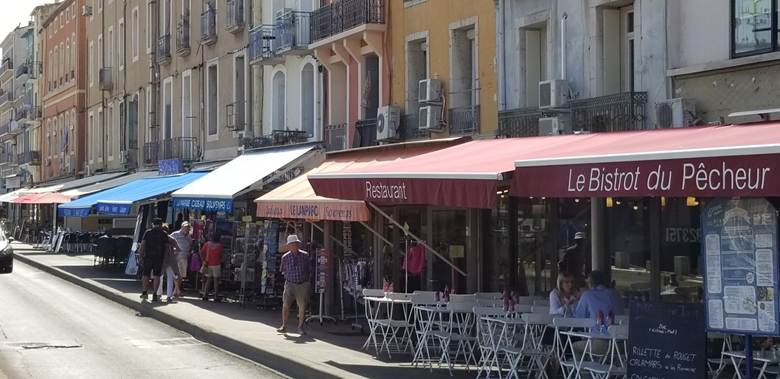
The Sétois have made their living from the sea from time immemorial. When you visit, you can’t avoid the sight of fishing boats along the quais in the main harbor. Nor can you miss all the restaurants that line the street facing the docks. Each one has a placard out front advertising the fresh fish and seafood that is available within. Sometimes we choose a cold meal of shellfish pulled from local waters. Sète is famous for its oysters. Of course, a warm meal such as a coquille St. Jacques is quite delicious too.
You’ll want to wash all that marine life down with a white wine. No, they don’t make wine in Sète. You’d have to drive a mile or two inland to see the vines. A local picpoul is not very expensive but tastes just great on a sunny day in the south of France. And it seems as though every day is sunny in Sète.
Sète was established when the Canal du Midi was built in the 17th century. Yes, there was a village there in Roman times, but the canal terminates in Sète, so commercial traffic reached the Mediterranean there. The canal is only used by pleasure boaters these days, but the port remains. It was a bombing target in World War II. The famous ship the Exodus left from Sète for Palestine with its weary Jewish survivors as passengers.
Today, smaller cruise ships make it a port of call. In part, that’s because of the attractiveness of the town itself. But also, it’s an entryway into the Languedoc. The medieval village of Pézenas is less than an hour’s drive away, as is the bustling city of Béziers. And, oh yes, there is wine tasting nearly everywhere inland.
For fans of French popular music, Sète has a particular attraction. The singer-songwriter Georges Brassens was born and lived his life there. His songs express humor, a little sexiness and the heart and soul of France at a difficult time in its history. Brassen’s love of Sète comes through in many of his songs as well. Just a bit away from the port there’s a museum dedicated to his life. It’s a worthwhile visit even if you don’t know Brassens or even like French popular music. His biography is so intertwined with the village that to know one is to know the other. At the museum there are many examples of the lives the Sétois lived and of how they think of themselves to the current day.
Sète is a good base for exploring the Languedoc. If somewhere else in the Languedoc is one’s home base, then Sète makes a fine day trip. Either way, it’s a small treasure to be cherished.