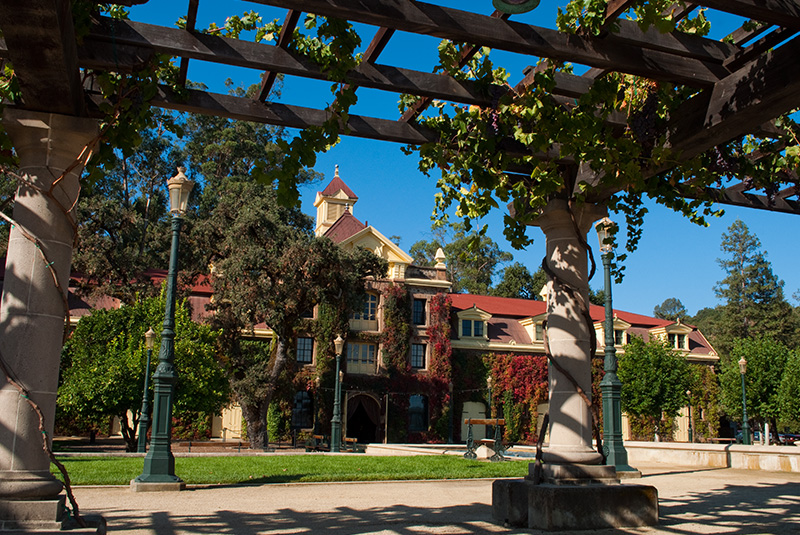
Walking through Vineyards

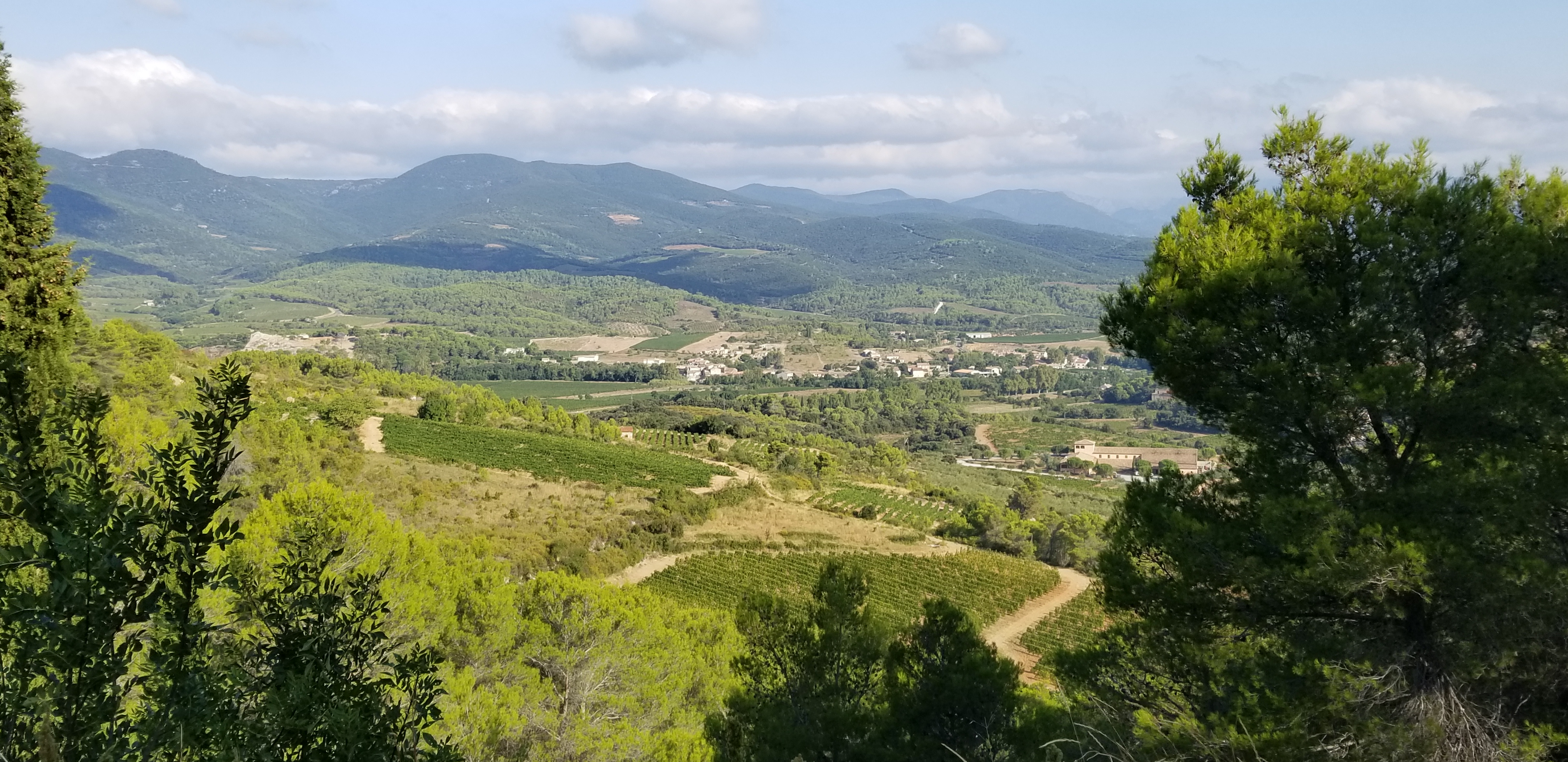
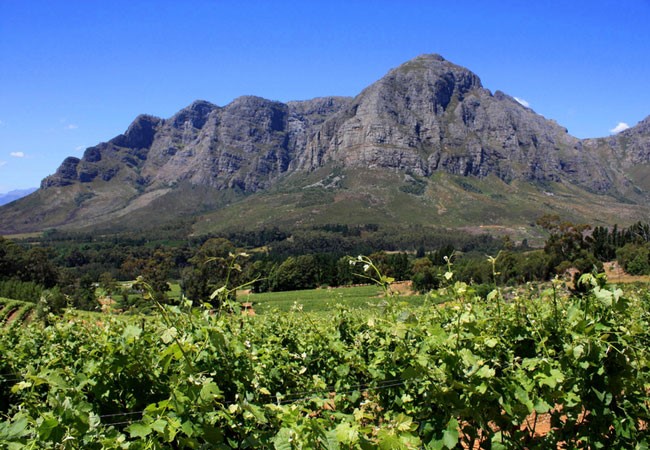
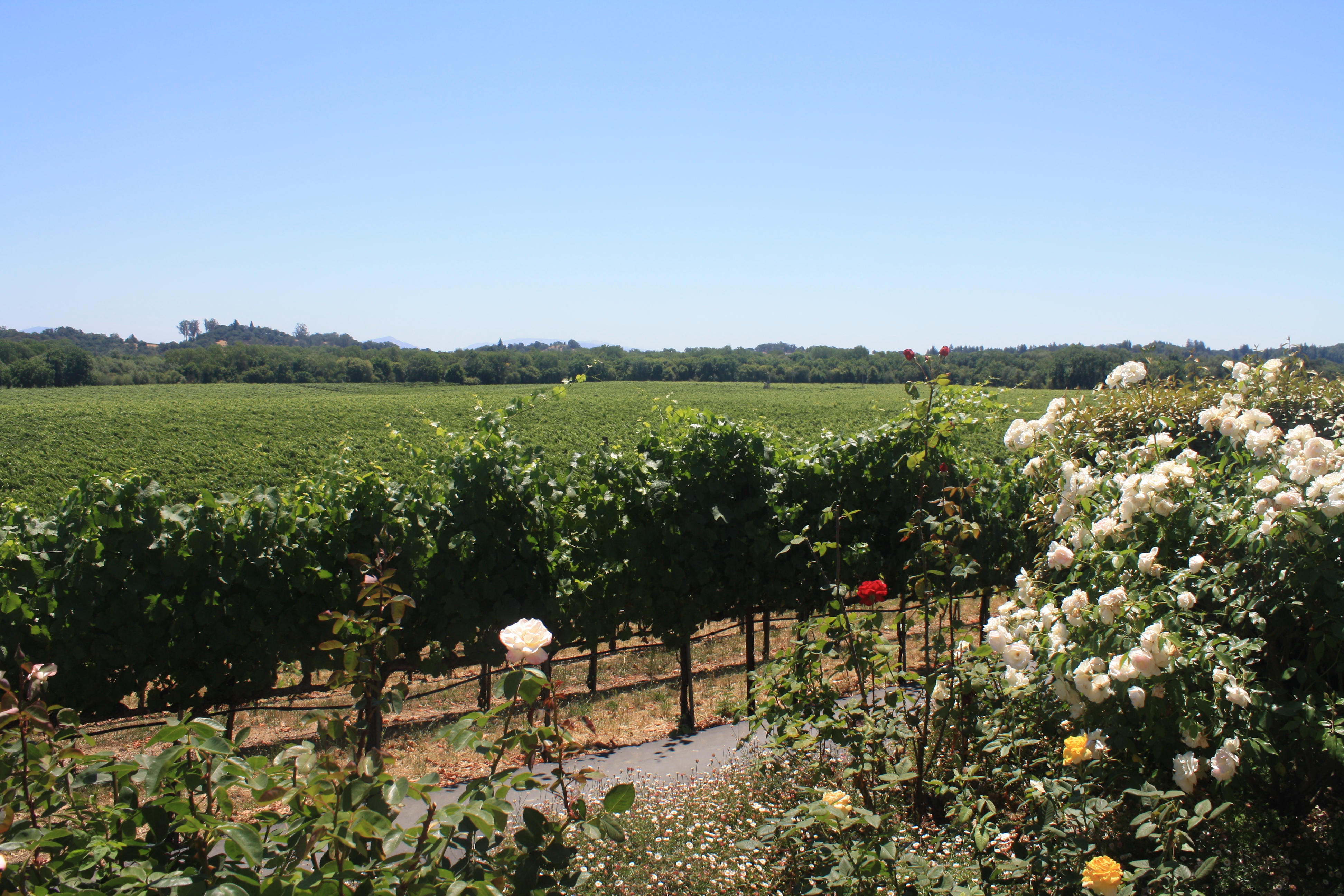
Wine is an art form.  It’s also an industrial process.  And it all starts with farming.  The art is something we understand.  The second we’ve been taught through books and winery tours, and sort of get.  But no matter how much we have read and heard about trellising, soil composition, canopy management and sun angles, we still don’t get it.  All we know is that vineyards are pretty.

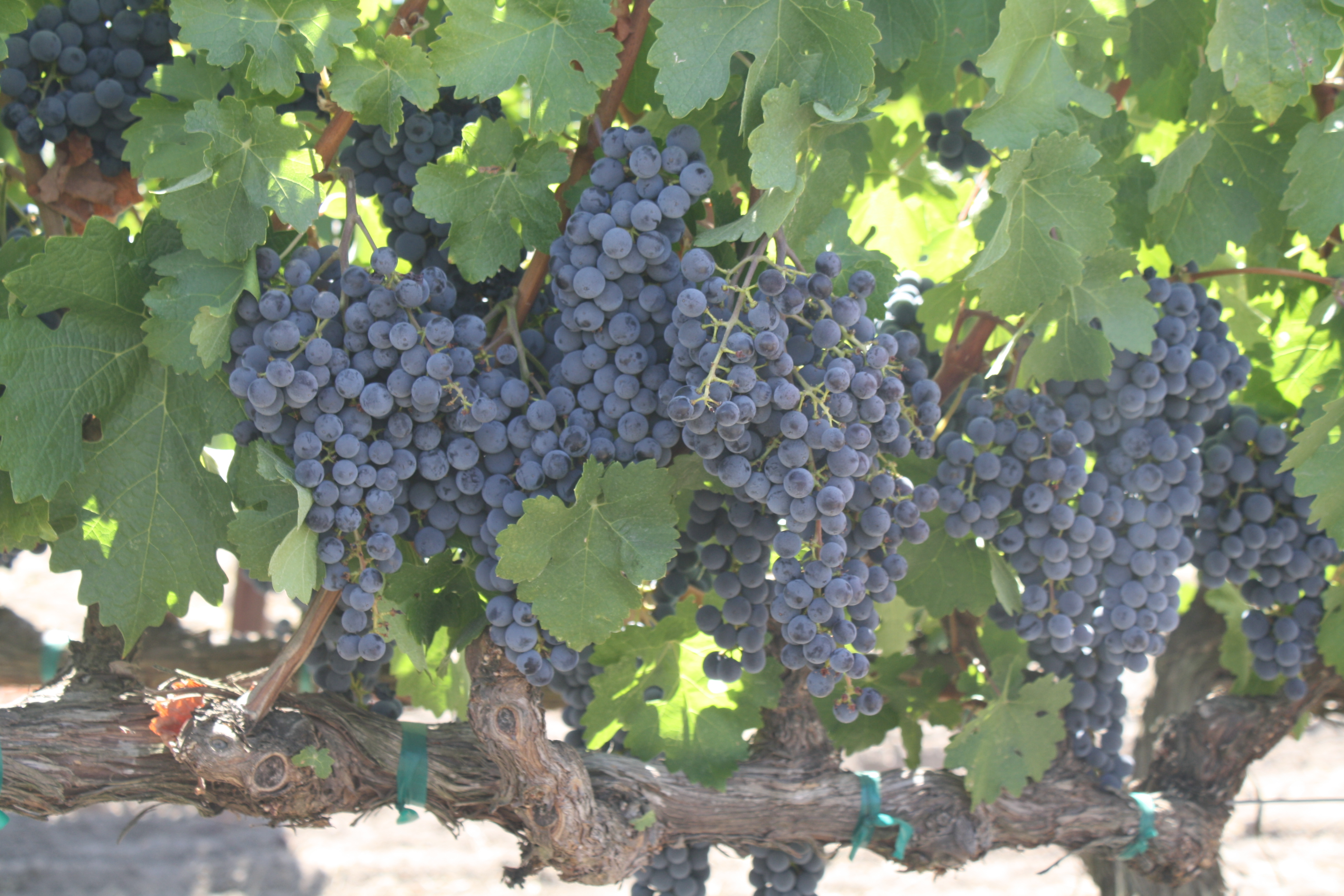
We like looking at them from a distance.  We like getting close up, especially when the vines are heavy with grapes near harvest time.  Our photo files are replete with pictures of dangling fruit. and if you are lucky enough to be in Wine Country just before the harvest, you’ll want these pictures, too.  And we just like walking through vineyards.

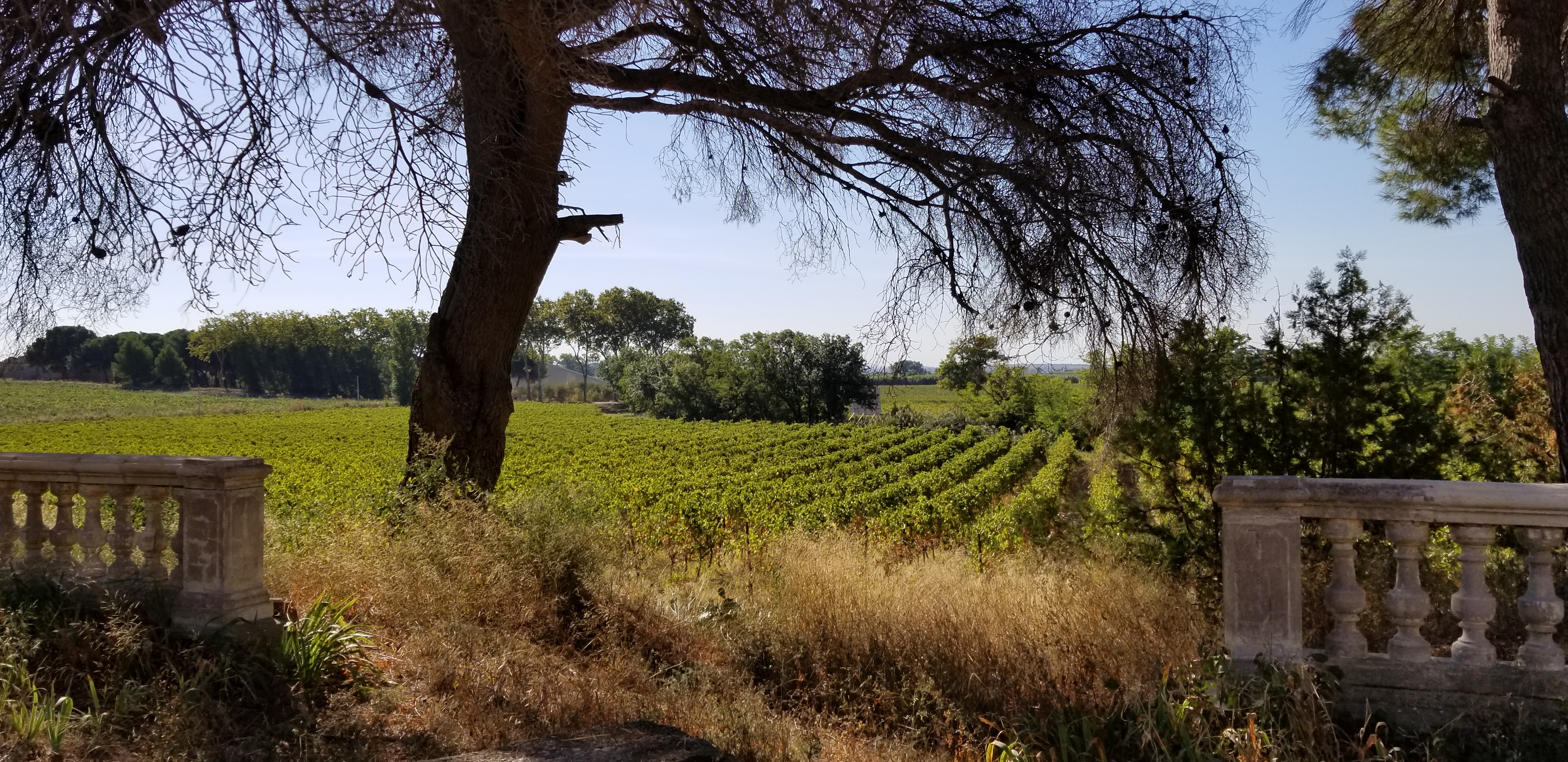
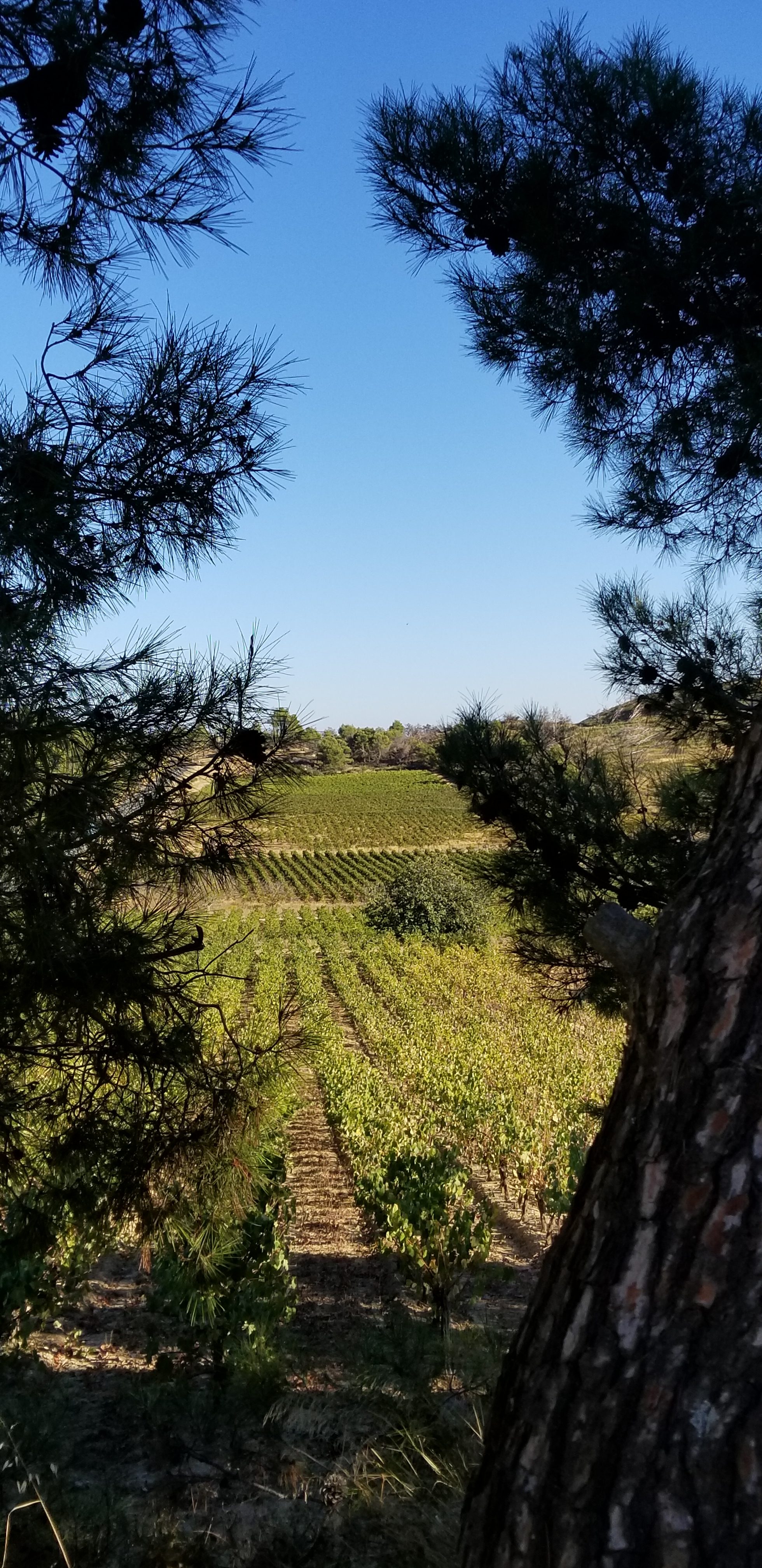
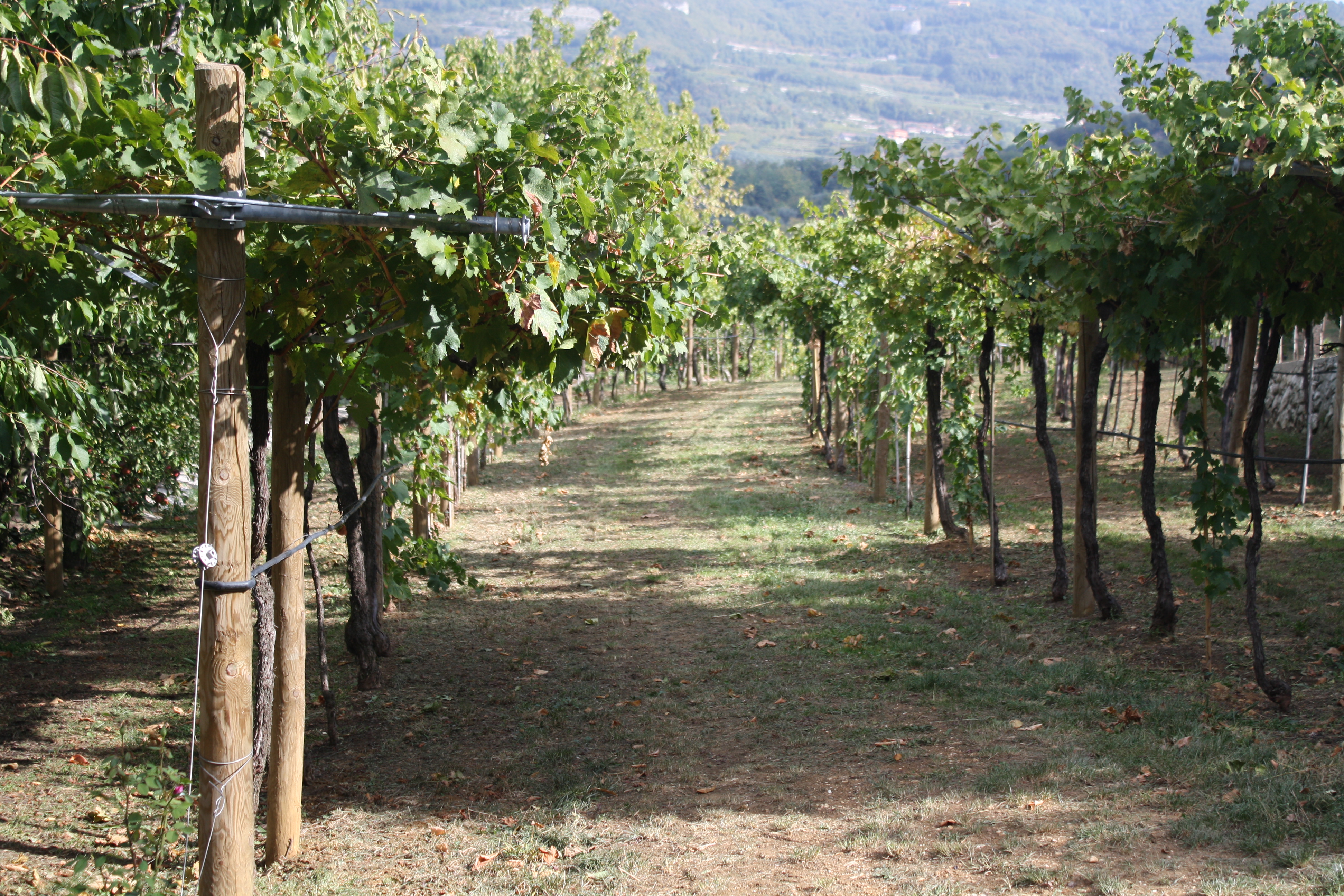
For one thing, you get a sense of the incredible variety in the way grape growers carry out their craft.  For example, in Beaujolais, they crop their vines close to the ground, whereas in California they are usually chest high.  In Burgundy, they grow their vines quite high, so that two visitors can lose one another if they’re not careful.  It’s something like the mazes that some corn farmers erect after their harvest.  And in Valpolicella, they grow their grapes so high that the vines are over a visitor’s head.

The vineyard of Quintarelli.Giuseppe in Valpolicella

Then there’s the sense of history you feel in certain vineyards.  There’s a little thrill you get knowing that wines have been made from the same produce you see before you, for years and years.  That might be only 45 years in Long Island (Castello di Borghese) or 450 years (Chateau Margaux).  And if you walk up the hill in Burgundy called the Corton-Charlemagne (where they grow grapes for a Grand Cru white wine) you are standing on ground owned by the Emperor Charlemagne, who lived in the 800’s.

Finally (and please don’t tell), if you’re in the vineyards at harvest time, you can sample a few grapes.  You know those grapes you buy in the grocery store?  They’re tasteless, sour things compared with wine grapes.  The more alcoholic wines are made from sweeter grapes, which have more sugar of course.  The grapes of Beaujolais (around 13%) aren’t shabby, but Zinfandels are small and often 14.5% or more and those grapes are super-yummy.

For some reason, the farmers are not wild about hordes of outsiders tromping through their fields.  Maybe they just don’t like tourists getting in the way of workers, raising a lot of dust and messing with the grapes.  So strolling through the vineyards is not always an activity appreciated by the proprietors.  However, in a previous vacation in Burgundy, we picnicked in a different vineyard every day and no one ever came to tell us to leave.  It was heaven!  In the next issue of Power Tasting, we’ll give you tips on how you can take a walk in a vineyard.


Think Globally, Drink Locally

Some years ago, Steve was visiting his friend Adrian at his vacation home in Southold, in the middle of Long Island’s North Fork.  One late afternoon, sitting on the veranda and sipping a local wine, the two fellows engaged in a hearty discussion about the value of Long Island’s experiments with wine production, still novel at that time.

Steve stated that the wines produced on the North Fork were nowhere near the quality of similarly priced wines from California, France or Australia.  So what was the point of paying top dollar for poorer wines?

Adrian’s response was that it was worth supporting the local industry precisely so that the wine makers would have the opportunity to improve over time.  At that point, many of the vineyards – and thus the vines – were ten years old or less.  If no one bought their wines in their youth, the vineyards would never have the opportunity to reach maturity and potentially great wines would never be made.

Bedell Cellars

As we say elsewhere in this issue, we are finding that North Fork wines are beginning to meet the test of time, albeit more so at some wineries than at others.  But the question at the heart of Adrian and Steve’s conversation remains: if there are better wines at similar prices from the world’s great wine growing appellations, is there any purpose for drinking wines from “lesser” regions?  What in fact makes one particular section of Wine Country better or worse?  Is it not just a matter of what we’re used to?

The original subject was Long Island’s wines but the same can be asked of, say, Santa Clara vs. Napa, Puglia vs. Tuscany or Languedoc vs. Bordeaux.  Why not limit yourself to the best?  In particular, for those of us who enjoy traveling for the purpose of wine tasting, is there any reason to make a trip to any but the “best” regions.  We have come to the opinion that yes, it does make sense, with some reservations.

As a general statement, these regions are lesser known, rather than simply of poorer quality.  In any given year, there are some great wines made in vineyards that are unlikely to show up in the pages of Wine Spectator, or if they do they’ll be in the voluminous lists in the back not the news articles up front.

In our recent voyages, we have discovered wines from regions we had previously either not known of or had disliked, such as Minervois, eastern Sicily and California’s Central Coast.    In most cases, there will be a greater concentration of top-quality wines in better-known regions, so with a little homework in advance you can raise your odds of trying the better wines and skipping the underachievers.  But if you don’t go, you won’t know.

Moreover, who’s to say what’s better and what’s worse?  Tastes, especially in wine, change over time.  It’s not that long ago that no one cared about Pinot Noirs from the Santa Rita Hills, Ripassos from Valpolicella or Shirazes from the Barossa.  Now these are highly prized wines, attracting buyers and visitors from everywhere fine wine is appreciated.  If nothing else, taking a wine tasting trip to a little known corner of Wine Country gives you bragging rights when and if that area gets recognition.

“Ah, yes, I remember when the growers were virtually giving away the wine and it was just small producers serving wine in their barns”.  That’s us, talking about Napa Valley a few decades ago.  Who knew then what a big deal it would be today?

Tired Taste Buds…or Not

A few years ago, we were on an extended wine tasting trip to Paso Robles.  We had been to most of the wineries we knew we wanted to visit, including Tablas Creek, Justin and Adelaida.  We had made some nice discoveries, such as Ecluse and Caliza.  We were fairly intent and the tasting was intense, because the hot growing conditions in the Paso Robles area lead to some very high alcohol content in the wines produced there.  In fact, one winery’s wines were topping out at 16.5 percent. Lucie was constantly complaining about the high level of alcohol in Central Coast wines.

On the last day of our visit, we were just driving along Route 46 stopping rather randomly at wineries along the way.  We had never heard of any of them, so the best that could happen was a new discovery and the worst was learning what to avoid in the future.  But that afternoon just seemed to go from worse to worst.

Now, Power Tasting’s philosophy is not to speak ill of wineries but rather to praise the ones that we believe deserve it, and we’re about the experience, not the wines themselves.  That day, we finally arrived at a winery where the experience was mixed.  The tasting room was tastefully decorated with antiques and the bar was almost unobtrusive in a space that felt like a visit to Grandma’s.  Unfortunately we entered just behind a family with two little boys who, as little boys will, wanted to touch everything.  The servers were in a tizzy, trying to pour wine while preventing destruction of the knick-knacks.   So we have to admit that conditions weren’t optimal for enjoying what was in our glasses.  That said, the wine was simply awful.  We paid our respects and left quickly, hoping not to hear anything break as we departed.

In the parking lot, we looked at each other and said “Maybe we ought to stop.  Our taste buds might just be worn out.”  Perhaps all we had sipped in the past few days had caught up to us and we simply couldn’t differentiate good wine from bad any longer.  There was, however, one winery that we had deliberately left for last because we knew their wines well and liked them very much.  This winery was Turley Wine Cellars (http://www.turleywinecellars.com), famous for their Zinfandels.  We gave ourselves one last try.

Turley’s tasting room in Templeton, near Paso Robles.  Photo courtesy of pairingswineandfood.com

We entered in Turley’s cool, woody tasting room and sipped some Zins.  Hosannah!  They were delicious.  Our taste buds hadn’t died after all.

There are a few lessons to be learned from this experience.  First of all, trust your taste.  Your tongue won’t actually shrivel up and die.  If you like a wine you’re tasting, it’s good wine…at least for you.  And if you don’t like it, it’s not good.  (Of course, if you’re sipping Lafitte Rothschild and you don’t like it, either it’s corked or you need to re-calibrate your taste buds.)

Another lesson is about the purpose of wine tasting.  It’s a joy to taste a famously great wine and maybe even more so to find a wine you’ve never heard of that blows you away.  But it’s also important to find out what you don’t like, to educate your mouth.

And finally, within the bounds of reason and safety, don’t give up.  If you don’t like the wine you’re tasting now, the next one may be the one that makes your whole wine tasting trip worthwhile.

Which One Is the Star, the Wine or the Winery?

In all the years that we have been visiting Napa Valley for wine tasting, a lot has changed.  It’s hard to say whether it has been, overall, for better or worse.  In our opinion, the wines are far improved over what was available in the 70’s and 80’s.  There is more diversity, more top-quality wine makers and (memory may be playing tricks here) the same wines from the same producers are better today that they were then.  More expensive too, to be sure.

But Power Tasting isn’t about wine, it’s about the experience of wine tasting.  In that regard, tasting in Napa Valley today is far different than back in the “good old days”.  In those days, tastings were usually in the barrel room, with nothing of architectural, cultural or sartorial interest.  There are no “two barrels and a plank” wineries left in Napa Valley although there are still some in other wine making sectors of California.

We certainly enjoy sipping wine in a comfortable setting, with a sleek wooden bar and some tasteful artwork on the walls.  More broadly, we prefer wine tasting in a comfortable atmosphere, with attractive surroundings and knowledgeable servers.  These are the types of wineries we seek out when we are traveling and there are many of them in Napa Valley.  Those old days weren’t always so good; a handsome tasting room is better than a barn, capacious glasses that let us savor the aromas of the wines we are drinking are better than the teensy glasses we had then and wine educators are more interesting to chat with than farmhands.

Sometime around the late 90’s or the early part of this century, two things happened.  The pioneer wine makers who established Napa Valley wines as we know them today were bought up by international corporations and these companies discovered that they could profit handsomely by making Napa Valley into Disneyland for adults.  And so they began to build what we term “Napa Palaces” where the objective was to provide an experience independent of the wines being served.

Inglenook winery.  Photo courtesy of the winery.

Some of these drew on Napa’s wonderful history.  For example, the Francis Ford Coppola’s  Inglenook, Beringer and Chateau Montelena are housed in 19th century buildings that have been restored to their former glory.  They would be worth visiting even if there were no wine to be tasted.  And the fact that all three of these do make excellent wines certainly doesn’t hurt.

On the other hand, wineries like Castello Amoroso, Darioush and even the newly constructed Stag’s Leap were built to be tourist attractions.  Regardless of the quality of the wines – and some of these are very good – visitors are unlikely to go away with the thought of the wine foremost in their minds.  They’ll remember the architecture, the shopping, the snobbishness and oh, yes, they tasted some wine too.

Castello Amoroso.  Photo courtesy of the winery.

To be honest, there are some of these palaces we enjoy.  For example, Domaine Carneros is a faux French château (which may be excused by the fact that it is owned by a real French château).  We love their sparkling wines and Pinot Noirs.  But for the most part, we enjoy wineries where tasting their products is given prominence.  Pretty surroundings should add to the wine tasting experience, not overwhelm it.

Visiting Domaine la Soumade

Close to 20 years ago, Lucie was on vacation visiting her friends in Provence and what better to do while her friend was going to work than a little wine tasting?  Let’s point out here that the Southern Côtes du Rhône is not California with its large wineries and palaces but a lot more modest in style and size.

Photo courtesy Domain la Soumade

On a cold January weekday, she was driving  in the small village of Rasteau, looking for the home of one of our favorite wines, Domaine la Soumade.  Driving back and forth along a small road, she finally spotted the name on a little signpost, but the only building there was a private house with a little shed in one corner of the garden.  As she approached the shed, a big dog barked at her loudly enough to alert the owner of the house.  A woman bundling a wool sweater around her shoulders against the chill opened her door to look at the intruder, asking what she wanted.  When Lucie told her that she came as far as Québec to taste her wine, the woman said she’d be downstairs in a moment.  As it worked out, this was Madame Romero, the wife of the owner and winemaker of Domaine la Soumade .  She invited Lucie into the shed which was the tasting room.

While tasting Domaine la Soumade wines, Madame Romero was intrigued why Lucie had come so far to Rasteau and where she was staying.  When Lucie explained that she was staying with her friends in Nyons, Madame Romero gave her a bottle of wine with a smile, saying, enjoy it with your friends tonight at dinner.

Photo courtesy of Domaine la Soumade

A few years later, Steve and Lucie were wine tasting together in Rasteau, during the harvest. Lucie wanted to take Steve to Domaine la Soumade but could not find the place.  The house was still there, but not the shed.  And where were all the people who should be wine tasting at that time of year?  Driving on the road to Orange we saw a beautiful building with Domaine la Soumade written on it.   Since Lucie had been there, they had built a winery and tasting room that could now compete with some of California’s (humbler) tasting rooms.  Madame Romero was there, serving behind the bar and when Lucie introduced herself to Madame, she immediately said, “Vous êtes la Québécoise! I remember you, you visited us before we moved here.”  The conversation went around that first visit, and then we were introduced to her husband, the winemaker, André Romero.  We had the immense pleasure of tasting some of their best wines, some traditional and others reflecting the enterprising spirit of Domaine la Soumade.  The highlights included the flagship red wine,  Fleur de Confiance and a delicious Rasteau “Vin Doux Naturel“  a sweet wine that is great at aperitif, but can be found only in France.

This experience will forever be one of Lucie’s most cherished wine tasting memories.


Visiting Napa/Noma in February

This is another in Power Tasting’s series on the best time of year to visit Napa and Sonoma Counties for wine tasting.  The answer is that there is no “best” time; each month has something special to offer. 

One thing to be said for wine tasting in Napa/Noma in February is that you’re one month closer to warm weather than you were in January.  It’s still winter to be sure and you are more likely to get a rainy day in February than you are in the summer.  But we have also experienced some wonderfully warm days in February, when with a sweater or light jacket you can sit outside and enjoy your wine under blue skies.

A particular advantage of going wine tasting in February is that many of the wineries issue their new releases that month.  We have always made sure to include a visit to Heitz Cellars in St. Helena in February, because that’s when you get to taste the Martha’s Vineyard (although we have recently found it in recent visits in other months as well).  Of course, there is a cloud to this silver lining; new releases haven’t had a much time in the bottle.  You’ll have to bring your imagination with you to have an idea of what these young wines will taste like when they grow up.

Another advantage is that the mustard is in full flower in the vineyards, a lovely sight to compensate for the absence of leaves and grapes on the vines.  The yellow flowers brighten up even the coldest day.  And yes, it can get fairly cold in February, despite the possibility of warmth – and often on the same day!

Mustard in the vineyards and lilac on the trees, as seen in February at Domaine Carneros.

That hot restaurant where it’s impossible to get a table in June has lots of empty seats in February.  The streets of Yountville and Healdsburg aren’t as crowded with tourists; you can actually take time in front of the paintings in the galleries; and the salespeople in the gift shops are actually glad to see you.  Many hotels have special package deals.  On the other hand, February has Presidents Day weekend and then every place is as full as in high season.  That weekend may be your only chance to get away for wine tasting, so anticipate the crowds.  If you can choose another time, especially midweek, we recommend you do so.(We experienced it and it was very unpleasant.)

You’ll get more attention from the servers in the tasting rooms those days.  In particular if you’re tasting on a cold miserable day,  the servers may be so glad to see anyone that you’ll be treated like visiting royalty.  To be fair, that advice applies more to smaller, out of the way wineries.  The big ones, especially those that take busloads of visitors, are still likely to be packed.

A February afternoon at Limerick Lane Winery

Everyone has a different idea of what constitutes cold weather.  If you’re a Floridian or a Southern Californian, February in Napa/Noma is definitely the depth of winter.  But if you’re a New Yorker or a Québécoise, a day when you can walk around outdoors sporting only a sweater is the first sweet breath of spring.  No grapes on the vines?  Forget about it; the buds will surely be breaking soon.  You can have the satisfaction of having your wine tasting vacation sooner than anyone else and the pleasure of doing so without the crowds.


An Unexpected Tour of Terralsole

A few nights before we began a trip to Tuscany, we opened a bottle of Italian wine that we had bought from a favorite wine web site.  At that point all we knew was that it was a Brunello,  had a beautiful label and that it was called Terralsole (“Land toward the Sun”).  Tasting it, we were very impressed and were glad we had more in the cellar.

Montalcino, in Tuscany, is famed for the wine first made in the castelli around the town: Brunello, made from 100% Sangiovese grapes.  The road system is radial around Montalcino; whichever direction you go you will find vineyards and wineries.  However, each direction also brings you to different terroirs, so the wines from each exhibit distinct characteristics and personalities.  As we drove down a road to the southeast of the city, we saw a sign that told us we had just passed the entrance to Terralsole.  One U-turn and five minutes later, we pulled up to the winery.  And no one was there.  Maybe, we thought, we were at the wrong building.  There was a nice looking structure at the top of a small hill, maybe that was it.

Terralsole  vineyard and winery.  Photo courtesy of Terralsole.

So Steve was delegated to climb up and see if anyone was at home, while Lucie stayed with the car.  After he shouted a few “Hello’s”, a young girl about six years old came out to see who was there.  Steve asked, “Is your mommy or daddy at home”, speaking slowly in hopes that she had a little English.  She shouted back into the house, “Mommy, there’s somebody here about some wine”.  Steve told her that she spoke perfect English and she replied, as only a six-year old can, “And I speak perfect Italian, too.”  Such was our introduction to the Bollag family, proprietors and winemakers of Terralsole (www.terralsole.com/).

Mom turned out to be Athena Tergis Bollag, a violinist, who had an appointment and was anxious to get away.  But graciously she told us that a) tastings were by appointment only b) there was no one able to serve us and c) maybe her husband, Mario, would accommodate us.  We were led back down the hill and met Mario Bollag, who proceeded to lead us on a tour of the property and the winery.

Mario then led us up to his office-atelier above the winery floor.  There he showed us sculptures and paintings, including the original used for the label of the wine we had drunk in New York.  It seems that Mario was also an artist and had in his earlier life been to Haiti, where he fell in love with the arts community there.  So he would sketch what he wanted for a label, send it to one of his Haitian friends who made a painting of it, which was then used for wine bottles.  Everyone benefited.

A Terralsole label.

We learned that Terralsole comes from vineyards in two sectors of the Brunello region, which gives Terralsole’s Brunellos the taste we had liked so much.  Mario opened something unusual, a Syrah that we tasted together.  It’s marketed as a Super Tuscan, but really has more of a French character.  We never did taste a Brunello there, although we bought some to take home with us.

Lucky Find

They say that no good deed goes unpunished.  Be that as it may, it’s not always the case and here’s a story to prove it.  In the summer of 2000, Steve got into a cab in New York City and there sitting on the back seat was a wallet, full of cash and credit cards.  He could have given it to the driver to turn in to the city’s Lost and Found, if there is such a thing, but instead he leafed through the cards and found a driver’s license.  Using his cell and Directory Assistance, he called the owner’s home in Windsor, CA.  Of course no one was at home – Steve found the wallet in New York after all – but he left a message.  Minutes later he received a call from the fellow who had lost the wallet.  He was amazed that he would get his wallet back, in New York of all places.

When the handover occurred, the gentleman offered Steve some money, which he turned down.  Steve told him to pass the word along in California that the nasty myths about New Yorkers weren’t all true.  Steve was asked for his business card and, expecting a thank you note, he gave one and sent the lucky tourist on his way.

A few weeks passed and Steve found a box on his desk with three wine bottles in it, his reward for returning the wallet.  Two of the wineries have become favorites of ours; sadly the third never lived up to its promise.  The two were Limerick Lane and David Coffaro.  In keeping with our practice not to speak ill of a winery, the third one will go unnamed.  They are still there to be visited and we’ll reflect on what they were like then as well as how they have changed since.


As it happened, Lucie and Steve made their first visit together to Napa/Noma a few weeks after the bottles arrived and we made Limerick Lane, in Russian River, our first stop.  Then and now it’s a bit hard to find, although in the ensuing years more wineries have opened on the eponymous road.  Lucie had never tasted a proper Zinfandel, nor had she seen or tasted the grape itself. (It is small and very sweet.) So this winery was a revelation.  At the time, the tasting room was little more than a garage with a folding table and some bottles, but the wines were eye-openingly good.  Back then it was owned by  Michael Collins, who focused on the Zins and in time added a very good Pinot Noir.  We joined the wine club and were quite happy with the wines Limerick Lane sent us.

The Bilbro brothers in today’s Limerick Lane tasting room.  Photo courtesy of Limerick Lane Winery.

In 2011, the winery was sold to the brothers Jake and Alexis Bilbro.  They changed the label (we preferred the old one), dropped the Pinot Noir and somewhat amped up the wines.  We were unhappy at the time and dropped out of the club.  In retrospect, 2011 was a terrible year across California and the Bilbro brothers picked a lousy time to take over the property.  We are happy to report that Limerick Lane no longer has a wine club because their wines have improved to the point that they get huge numbers from the press and many of their wines are allocated.

David Coffaro in his vineyard, in his habitual “suit”.  Photo courtesy of David Coffaro Vineyard and Winery.

As much change as there has been at Limerick Lane, there has been very little at David Coffaro.  It is still sitting alongside Dry Creek Road, with Dave very much still in charge.  If you like big, fruit-forward wines made from familiar and unfamiliar grapes alike (and often blended together) then you’ll like what come from this winery. For sure, Dave’s wines aren’t for the faint of heart so if you like big, bold California wines, Dave’s your man.  See our previous review of David Coffaro Winery for more information.

Don’t you just like stories with happy endings?


Dealing with “Sideways”

If you love going wine tasting, as we quite obviously do, and if you enjoy telling friends about it, you will inevitably be asked whether you have seen the movie Sideways.  Well, yes we have and we liked it quite a bit.  But since the movie may be all your friends know about a wine tasting trip, you owe it to them to point out what is and is not realistic about it.

First, the film gives you the idea that people who visit Wine Country for tasting are jerks and geeks.  (We deny being either.)  In our experience, the jerks are most often people who want to drink rather than taste and have often been previously overserved.  Most wineries are pretty good at dealing with this sort, for their own protection and to preserve the positive experience of other visitors.  As for geeks, these are often normal people who are enthusiastic about one topic – wine tasting, in this instance – and are eager to share it.  As long as they aren’t intimidating wine snobs, they are usually nice to deal with.

Often, people will tell you that they really liked what they saw of Napa Valley in the movie.  However, the wineries and other locations shown in Sideways are from the Central Coast, in and around the town of Los Olivos.  This is a wonderful sector of Wine Country, with Pinot Noir and Chardonnay grown to the west and Syrah to the east.  There are some excellent wineries in the movie such as Fess Parker, Foxen and Firestone, well worth visiting.  But they are hardly representative of California wine tasting as a whole.  In particular, the town of Los Olivos is unique.  It’s a quiet little California village that just happens to have an exceptionally high concentration of tasting rooms along its Grand Avenue.  This is an opportunity for some interesting wine tasting, but this kind of atmosphere usually is found in urban settings, not a small town like Los Olivos.

What we find most evocative in the movie is the passion for wine experienced by its protagonists (well, some of them).  The scene in which Paul Giamatti and Virginia Madsen explain what wine means to them is eloquent and affecting.  Of course, you would be eloquent and affecting too if you had script writers.  All the same, there is a spirit of seeing beautiful scenery, trying fine and not so fine wines and eating Wine Country meals that comes through in Sideways.  That spirit is instantly recognizable to those of us who go wine tasting often.

There is much in the movie that evokes the real experience of wine tasting, despite the characters’ love lives and other shenanigans.  Probably the worst thing in the movie is what it did to Merlot production in California.  The fellow who keeps crying “No more Merlot” is a Pinot Noir lover, fair enough, but he doesn’t really know what merlot tastes like, as shown by the St. Emilion he drinks at McDonalds.  That’s right, it’s made primarily from Merlot grapes.

So when Sideways comes up in conversation – and even thirteen years on from its debut, it will – tell your friends that it’s a fun movie and that some of it actually reflects your own experiences in Wine Country.  Then suggest that they take a wine tasting trip and experience the real thing for themselves.

Cheers !

Visiting Napa/Noma in October

We are returning to the topic of the best time to travel to Napa Valley and Sonoma County, which we consider to be essentially one place called Napa/Noma.  All times of the year are good times, but each month presents its own enticements and occasional challenges.  Previously we have discussed January and April.

As East Coasters and Québécois, we see one of the advantages of autumn to be the extraordinary coloration of the foliage that we are treated to each October.  Until we first visited California Wine Country, it had never occurred to us that the vineyards come alive with color each year as well.  I guess we never took the Turning Leaf brand from Gallo all that seriously.

This photo was taken on St. Helena’s Pritchard Hill, looking towards Lake Hennessy

If you go in the first part of the month, especially the first week, you’ll have the chance to see the last days of the harvest.  As global climate change takes hold, the beginning of the crush is coming earlier and earlier.  It used to start in mid-August but now July harvests of some white grapes is not unheard of.  In October, most of the grapes are in the process of becoming wine, so you’ll have less chance to see them hanging on the vines.  What will be there will be red grapes in the higher elevations and those that are destined to be late harvest dessert wines.  October is, after all, late for a harvest.

All of this is made up by the glorious display of colors in the vineyards.  We’d like to say that the red leaves are Cabernet Sauvignon leaves and the yellow ones are Chardonnay, but that just isn’t so.  As with oak trees and maples, different leaves have their own pigmentation that is overwhelmed by chlorophyll during the spring and summer.  As the chlorophyll fades in fall, these colors come out.  The predominant hues are a golden yellow and orange.  In time, as they dry they become a light brown.  There always seem to be some green leaves that hang on, so it’s quite a palette.

The red leaves you see in the photos accompanying this article are a special case.  As tourists, we love to see them.  Vineyard managers and wine makers aren’t very happy though.  Red leaves are a sign of leaf roll, a virus carried by bugs that live in vineyard soil.  It seems to be an increasing problem, according to some industry publications.  So temper your pleasure at seeing fields of blazing red, as it’s an indication that there may be problems down the road for some of your favorite wines.

Photo courtesy of Wikimedia Commons

When you visit wineries in October, and taste at their bars, the staff you encounter would have a right to be a little tetchy.  Harvest season is full of stress in the wine business.  We’re glad to report that we have never encountered anything like that, but we also haven’t seen too many wine makers at that time, either.  One time, however, a wine maker handed us a stick and asked us break the cap on a vat of bubbling grapes, so be prepared!

Since autumn is the harvest season for fruits and vegetables other than grapes, you’ll have the chance for something special in the Napa/Noma restaurants that feature local produce.  Mustards  in Yountville and Dry Creek Kitchen in Healdsburg fall into this category of restaurant, and there are many others.

Days are still warm, although you may want a sweater in the morning and in the evening.  You won’t usually encounter the blazing heat of Napa/Noma’s summers but again with climate change, you can never tell for sure.