Over the years that we have been involved in wine tasting, there’s one thing we can say for sure: It has gotten a lot more expensive. On our earliest trips, tastings were free and you got to take the glass home with you. These days, the fees for the opportunity to sip top-tier wines can run into the hundreds of dollars per person.
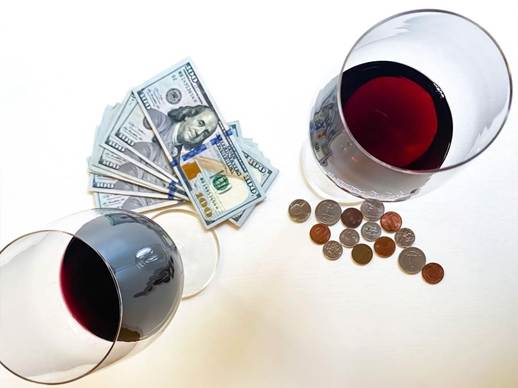
There are several reasons why this is reprehensible, even if it is necessary for the financial health of the wineries. For one thing, there doesn’t seem to be any correlation between the cost of the wines being served and the fees charged to taste them. If a bottle of “elite” wine costs, for instance, $100 then why does a chance to try four or five small pours – equivalent to about a glass – cost $125? We think it’s more a snob effect: Charge a lot and keep out the riff-raff. But they are also keeping out visitors eager to learn about fine wine as well as people with educated taste but more meager pocketbooks.
For those unwilling to pay the big bucks, there are alternatives that provide plenty of interesting wine tasting but don’t require a second mortgage to indulge in them. We term these “value” tastings.
- Take the least expensive option offered in the tasting room. They say you should buy the worst house in the best neighborhood you can afford. The same may apply to wine tasting. For example, Beringer, a winery that we have enjoyed greatly over the years, charges $150 to sample the best of their current and library wines. But they also have tours and tastings that range from as low as $35. You won’t sip the best on the less expensive tastings, but you won’t get plonk either.
- Or try the opposite approach. There are occasions where the best house in a lesser neighborhood works just fine. And there are wineries that don’t have the same cachet as the biggest names in the valley but are capable of making some better quality wines. Many of these are only available at the tasting room, so you can take advantage of them while you are there.
- Manage your expectations. If you enter the tasting room looking forward to an exceptional wine adventure at a low price, you’re likely to be disappointed. But if you anticipate some good wine served in a pleasant environment by knowledgeable people, you will likely have a good time.
- Ask a lot of questions. If you are a newbie to wine tasting, the questions will probably be rather elementary, which is just fine. A decent server will use the opportunity to explain some basics about wine making, different varietals and how to get the most pleasure out of a glass of wine. On the other hand, if you have some experience and are interested in gaining knowledge, the server may just discover a little bit of some better wines that just happen to be open and give you some little extras.