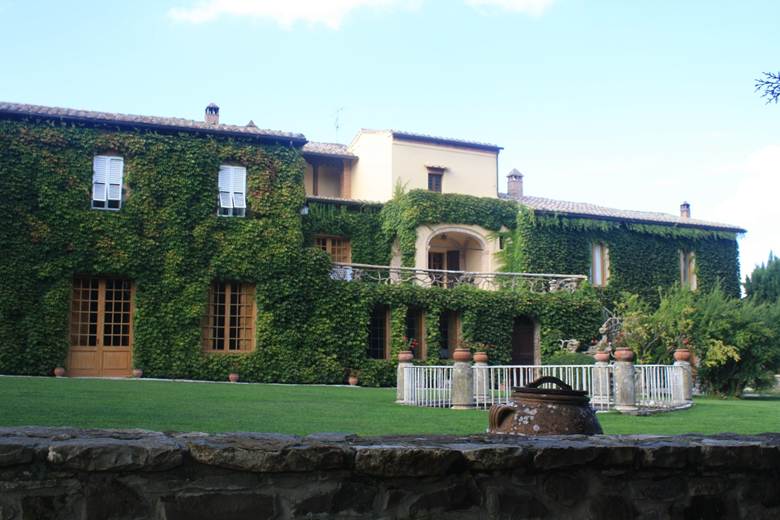
Barolo is a wine, one of Italy’s greatest, made from Nebbiolo grapes. Barolo is also a district in the Piemonte section of northwest Italy, known as the Langhe, where the grapes for Barolo are grown and vinified. And Barolo is a very small village in that district, the namesake of the wine.
As we have noted previously, this area is a premier destination for wine tasters. Almost without exception, it is necessary to make reservations for tastings, most of which include a tour as well. This is fair, as most wineries are small, family owned businesses and they can’t manage to have visitors just dropping by. But there is one important exception: Borgogno (www.borgogno.com), located right in the middle of the village of Barolo.
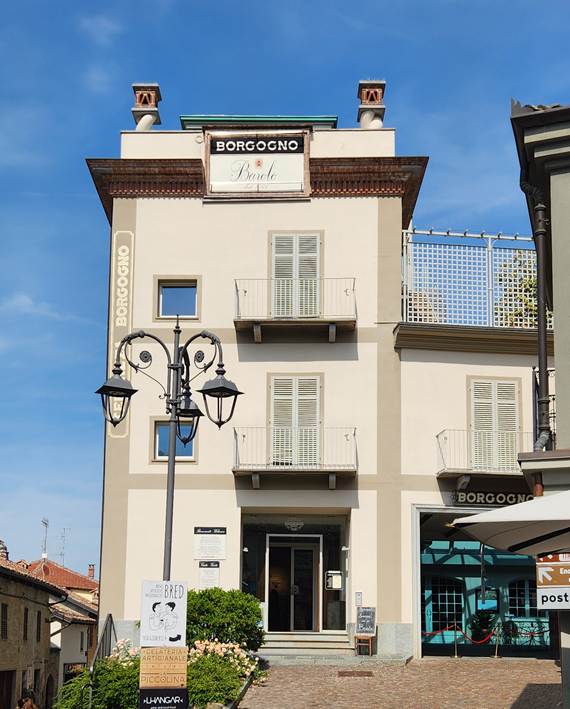
After a (reserved) tasting at Marchesi di Barolo, of which we have previously written, and a lunch at a charming bistro in the village, we were just wandering around when we came across a piazza with a large white building with a sign for Borgogno on top. Importantly, it also had a sign out front inviting visitors to come in for a taste of their wine. We had already known the label, because a restaurant near us has their Barbera d’Alba on its wine list and we order it often. But we didn’t know about their Barolo.
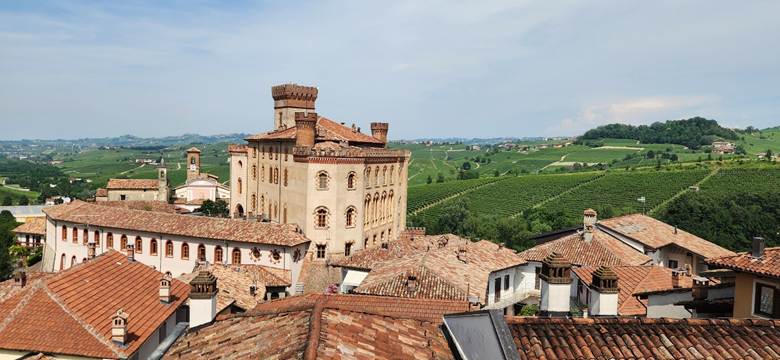
To be completely accurate, Borgogno does offer seated tastings by reservation. What we were able to do was to walk in, order a glass from their list and enjoy it sitting on their rooftop. From there, we had views of the village, the surrounding countryside and the Castello Falletti di Barolo, a rather imposing castle in the village itself. This is an excellent way to spend some time on a sunny Italian afternoon!
Borgogno claims to be the oldest Barolo winemaker, as do several other wineries. It was founded in 1761 and the building (or one much like it) in Barolo dates at least to the 1920s. So there is a sense of history to go with a visit there.
The prices for a glass of Borgogno Barolo are quite reasonable. They range from as little as eight euros for a Barolo Classico, made from grapes grown in a variety of vineyards. For only two euros more, visitors can indulge in single-vineyard Barolos. There are also a few Riservas (we call them library wines in the US) dating back as far as 1982 that naturally cost quite a lot more. Still, it’s unusual to find aged wines available by the glass.
There are many wine bars in and around Barolo where people can stop for a glass (or more) of the local wines. Some of them have impressive lists. But it is quite different to have the opportunity to compare and contrast wines from the same producer, creating your own horizontal tasting. Add to that the chance to take in the scenery from up high, and Borgogno is definitely a place to stop if you ever go wine tasting in Barolo: the sector, the village and the wine.