Value Tasting in California

Wine tasting, at least in California’s prime winemaking regions, has become an expensive pastime.  What winemakers once – a long time ago – considered a form of marketing has become a profitable sideline for the wineries themselves.  We’ve heard that Napa Valley is America’s number one adult tourist destination (we can’t vouch for that) but we can say that the roads and tasting rooms in Napa Valley and Sonoma County are more crowded than ever.

Photo courtesy of Cal Alumni Association

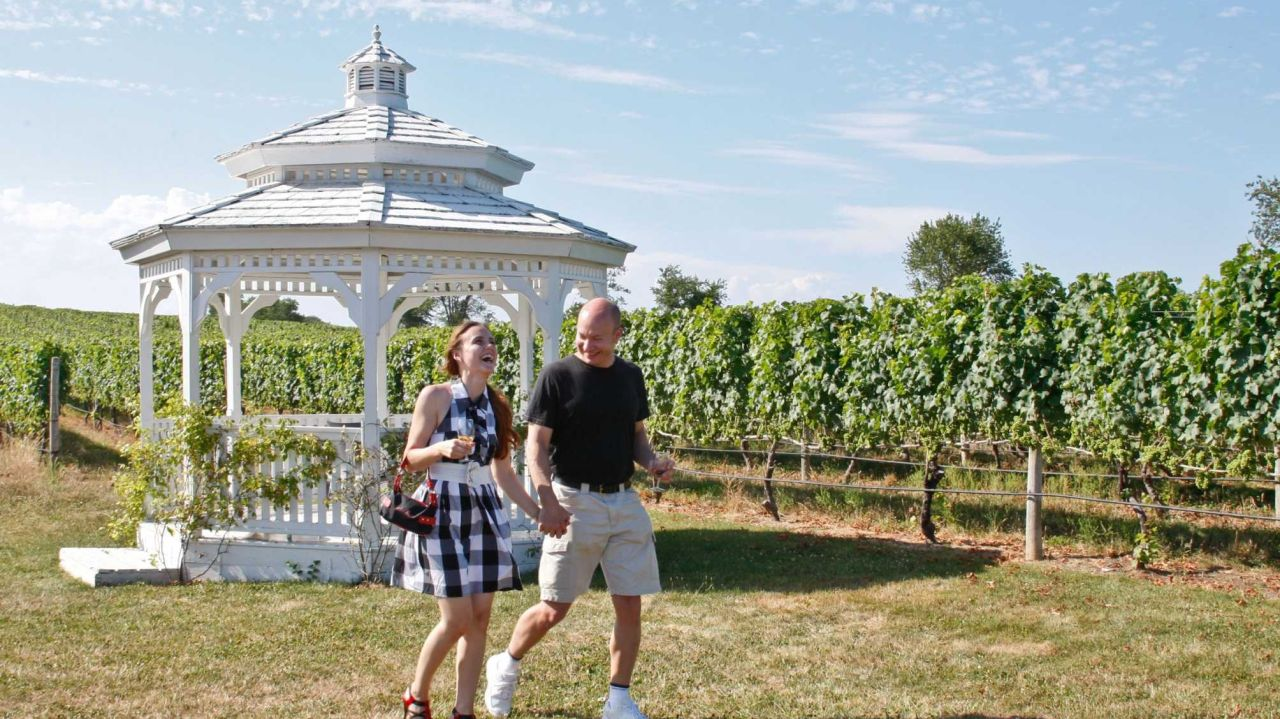
Along with these trends, the cost of tasting wines at the wineries has risen dramatically.  For some of the more renowned wines, a charge of $40 or more is no longer unusual.  It is commonplace to find a $25 fee for tasting from a winery’s reserve list.  There are people who neither want nor can afford to pay those prices.  Perhaps they are just looking for a pleasant day in the country, with a picnic and a little wine tasting to add zest to the day.  For them, paying top dollar for a few sips just doesn’t make sense.

We have long advocated tasting the best wines when visiting Wine Country, because they provide the maximum pleasure.  But for those who would also like to have the maximum value without paying the maximum price, here are some ideas for attaining that double goal.

  • Look for wineries that offer free tastings. Yes, there are still some.  The most famous and by far the best is Heitz Cellars.  Joe Heitz, one of Napa Valley’s pioneers, never wavered from his goal of making great wine accessible and his winery still offers tastings without charge.  Don’t miss this one.  A few others, such as Buehler, Sutter Home and Vincent Arroyo are also still free of fees.
  • Do a little homework in advance. Figure out what sector you would like to visit, keeping thoughts of where you can picnic in mind.  For a variety of legal reasons, picnicking is much easier to do in Sonoma County than in Napa County.  Check web sites to learn if you can bring food.  And then check the cost of tastings.  There are still some bargains around.
  • Buy a bottle. In many cases, if you buy a bottle of wine, the winery will waive the tasting fee.  So a bottle of wine to accompany that picnic may make for a free tasting.  And of course, you can take a bottle home with you for another time.
  • Share your tastings. If your objective is tasting, not drinking, two people can share a single tasting, thereby bringing down the cost.  We do it all the time, not so much for money reasons as to manage our intake of alcohol.  That way you might be able to splurge a bit on a pricier winery.
  • Try the less costly list. There’s no rule that says you only have to try only the reserve list.  And in fact we have found that in some cases, there’s no particular advantage to a winery’s most expensive wines. You’ll find some pretty nice wines at places like Beaulieu Vineyards and Chateau St. Jean in their regular tasting rooms, as opposed to their reserve rooms.

Visiting Napa/Noma in November

No matter what T. S. Elliott says, some believe that November is the cruelest month.  In northern California’s Wine Country, the grapes have all been harvested; the new wine is all in barrels; and even there you can feel winter coming on.  But at the same time, the frenetic atmosphere of harvest has past and the crush of high tourist season has disappeared with the summer.  The general bonhomie that settles in across America as Thanksgiving approaches can be felt in Napa/Noma as well.

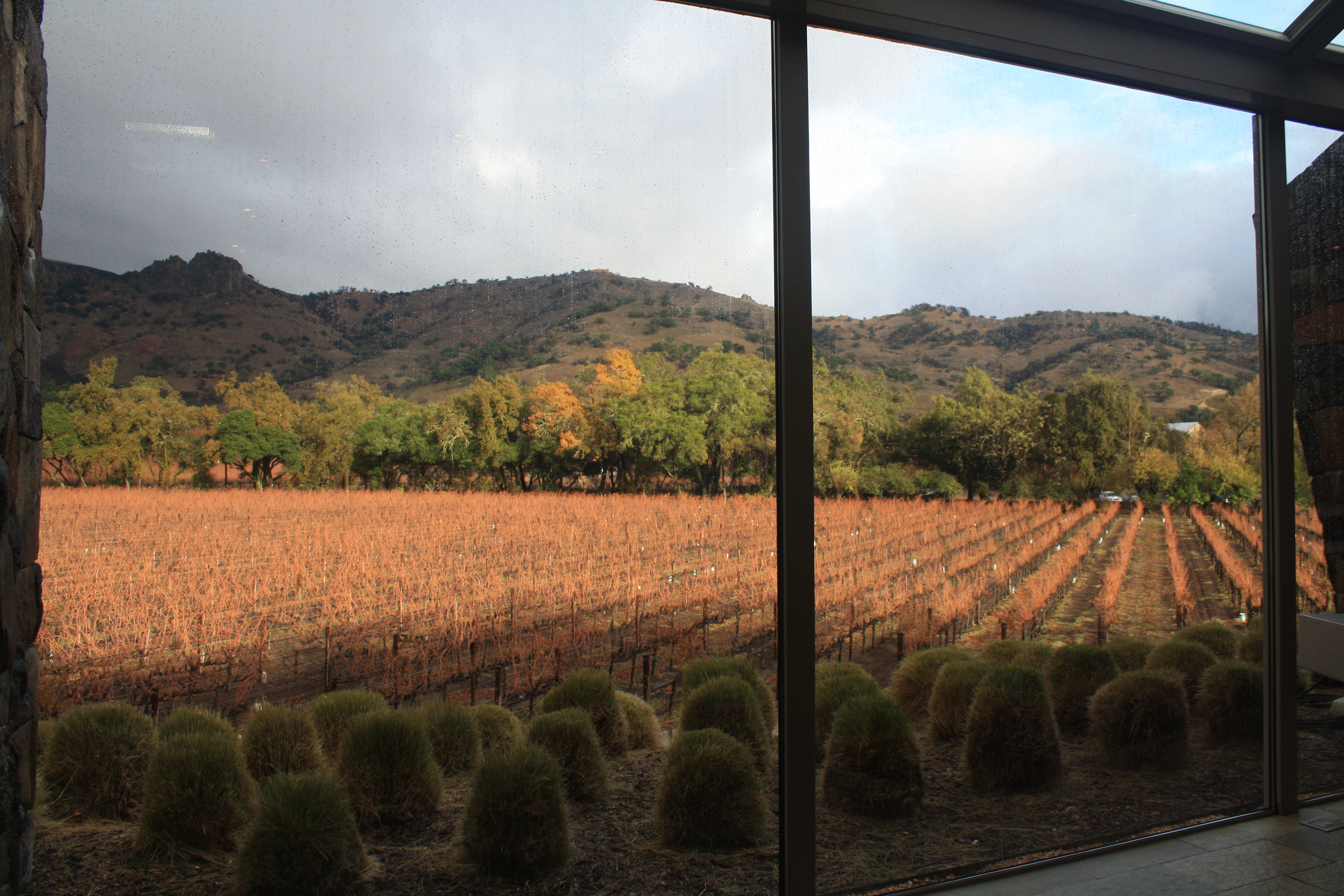
A lot of the pleasures of visiting Napa/Noma depends on the time of the month that you are there.  In the early days, many of the trees are in their autumnal glory.  More important, so are the vines.  There will be many brown leaves but also bright yellows and oranges, a few hardy remaining greens and some vibrant reds.  Sadly, the red leaves are a sign of what is known as “leaf roll”, meaning that the vines are getting along in years and will soon enough stop producing.  They will be replaced by seedlings, but visitors can still enjoy their bright color in the fall.

Photo courtesy of Yountville.com

In the latter part of the month, Thanksgiving and the beginning of Christmas season lend a festive quality to Napa/Noma.  Almost all wineries have put on their holiday decorations; they sell giftware and a few are really little more than novelty stores that serve wine.  So you can get a lot of your holiday shopping done while you sip.  For those who favor wine-themed gifts, we have in the past bought a wreath made of vines and a gold-dipped grape leaf to hang on a Christmas tree.

Along with summer’s crowds, summer’s heat disappears in November as well.  Instead of searing 90’s, you’ll find afternoons in the 60’s and mornings rather colder than that.  We recommend packing a sweater and maybe even a heavier jacket.  It’s up to the individual whether this temperature is bracing or just brrrr.

November can be a season for tasting newer vintages.  Wines that sat in the barrels for 18 months or longer will have just gone through the bottling and labeling processes and are just hitting the stores and the tasting rooms.  Of course, these are young wines and you might prefer them with a bit more age to them.  November is really not about what you should be drinking now but what you will be drinking in a year or two.  It’s a good idea to bring a long a Clef du Vin if you have one, which can help you simulate what the wines will taste like a few years hence.

On or about November 1, the rates for hotel rooms in Napa/Noma go down, so you might get a better deal on accommodations.  The prices in restaurants, alas, do not follow suit but since there are fewer tourists, it becomes easier to reserve a table in some of the more exclusive places.  You might even find yourself sitting next to a winemaker, who finally has a chance to slow down and enjoy dinner out after a hectic few months.

That’s the theme of a wine tasting visit in November.  Everything is easier and more relaxed, which may be exactly what you are looking for.

Gary Farrell Winery

If you want to know about California winemaking in the 21st century, you need to get acquainted with the Russian River Valley.  The history of nearby Napa Valley is more renowned and California would not be the powerhouse on the world’s wine stage if it weren’t for Napa Cabernet Sauvignons.  But that is certainly not the whole story; Russian River’s Chardonnays and Pinot Noirs deserve just as much attention.

We say this because we love visiting this corner of Wine Country.  We also have to be honest and say that we actually prefer Pinot Noirs from Carneros and Santa Lucia Highlands.  But Power Tasting is all about the wine tasting experience, and there are few as pleasant as driving the small meandering roads of Russian River Valley.  And there are few wineries where the tasting experience is as pleasant as at Gary Farrell Winery (http://www.garyfarrellwinery.com).

Mr. Farrell began the winery in the late 1970’s and produced wines under his own label in 1982.  He has long-since sold it and the team that owns it now has considerable winemaking chops.  None of this is necessary knowledge for you to enjoy your visit there.  The winery is a wee bit hard to find.  First you have to find Westside Road, naturally enough on the west side of the Russian River.  You will love driving along this shady road, really feeling that you have discovered Wine Country.

The view from Gary Farrell Winery

Then keep your eyes open for a sign announcing the Gary Farrell Winery.  Take a narrow road up a hill and the tasting room is right before you. It’s a handsome, modernist building and most importantly it is nestled above the trees.  If an eagle wanted to go wine tasting, it would land at this winery first.

The interior is also a welcoming blend of wood and windows, with an ample terrace where you can sip your wines.  There’s something about Pinot Noir and treetops that go together quite well.  What you won’t see from the winery are vineyards.  Gary Farrell sources its grapes and does so from some of the better-regarded vineyards in Russian River, such as Rochioli, Baciagalupi, and Martinelli.  They have recently begun sourcing from further afield and now make wines from the great Bien Nacido vineyard in Santa Maria county.

As a result, a tasting at Gary Farrell can be a tour of different terroirs in the hands of a single winemaking team.  That too is an important part of the wine tasting experience.

The winery’s web site now says that they are open by appointment only.  We have never had one and have never been turned away but they do seem more insistent now.  Their web site also says that the tastings take quite a lot of time, a minimum of one and a quarter hours.  We certainly don’t advocate gulping down your wines, but their estimate seems a bit sluggish to us, even with time to admire the view.


Morgon

The Beaujolais region of France (actually the southern end of Burgundy) makes wines that generate a lot of differing opinions. Some think they are little more than plonk; others, including us, say that there are many excellent Beaujolais, well worth drinking and some worth cellaring.  These points of view arise because there is so much geographic variety in this sector.

If the wine is simple a Beaujolais, it can come from anywhere in the region and is likely made from less than the best Gamay grapes.  A Village  is better made, generally from grapes from the southern end of Beaujolais.  But the wines known as crus are the top of the list.  They come from ten specific communes or villages in the northern end of the region.  They are Brouilly, Côte de Brouily, Régnié, Chiroubles, Fleurie, Moulin-à-Vent, Chenas, Julienas, St. Amour and Morgon.

There is a range of style and quality among the crus.  Some are thin and acid; some are flowery (they don’t call it Fleurie for nothing), some are deep and rich.  And then the last mentioned of these crus, Morgon, has six different sub-sectors, called climats, each of which has distinct characteristics.  The most powerful and best known is the Côte de Py, in the middle of Morgon.

So wine tasting Beaujolais is a much more complicated matter than just driving into a section of France and visiting wineries.  So let’s just focus on Morgon.  Because it’s our favorite, that’s why.

The Cooperative in Villié-Morgon

Assuming you’re coming from the south, from Lyon, drive north on the A6, which is a relatively wide road.  It’s about a 45-minute drive.  Turn left when you see signs for Villié-Morgon, the only town in the region.  It’s a nice enough little town but not one for which you ought to plan a special trip.  But it does contain the Cooperative of Morgon and that is worth a stop.  There you’ll learn more detail about everything contained in the first three paragraphs of this article.  You’ll see exhibits explaining the history and culture of Morgon and can sample tastings from the various climats.  It is fair to say that, as with most cooperatives in France, you won’t be offered the best wines of the AOC, but you will get an introduction to the differences within it.

Because it is centrally located, Villié-Morgon touches on four of the six climats.  So staying within hailing distance of the town you can visit quite a few high-quality wineries without travelling very far.  But understand that this is not California, where the wineries have elaborate tasting rooms.  You well may find that even some of the better labels come from small vineyards and you will have a chance to taste in the front room of a farmhouse.  Also, if you are there in the vendanges, harvest-time, they may be too busy to offer you a taste at all.

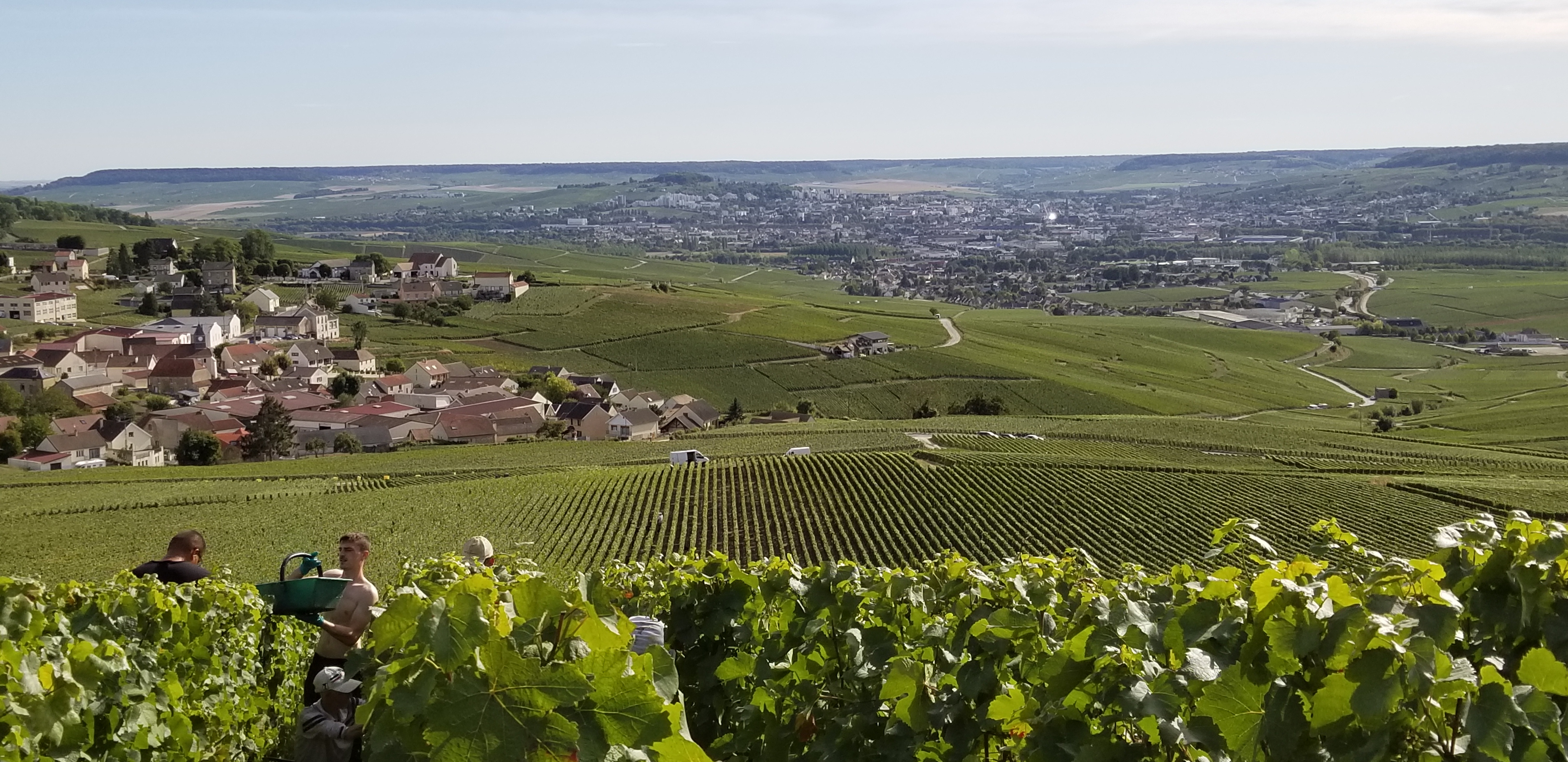
Harvesting the Gamay grapes that will soon be Beaujolais.  Note how low they keep the vines in this region.

Villié-Morgon has a few cafés and bistros, but nothing of any note.  If you’d like to have a truly memorable French country meal, we recommend you drive through the Côte de Py following the main (only) road until you come across signs for Le Restaurant Morgon (http://www.restaurantlemorgon.fr/) .  It won’t set you back much; you can avail yourself of their wonderful cellar full of Beaujolais of a quality you may never have known of; and the food is fabulous.  Leave room and some wine for the cheese course.

Antica Bottega del Vino

This is another in Power Tasting’s occasional series on great wine bars of the world.  Previous locations have included the Bounty Hunter in Napa and W.I.N.O. in New Orleans.

Generally, when Power Tasting recommends a wine bar, it is not primarily a restaurant with a bar in the front.  We make an exception for the Antica Bottega del Vino in Verona, Italy for a couple of reasons.  First of all is the name; it means the Old Wine Shop, so you know right from the beginning that wine is king here.  For another, the wine bar draws its own patronage distinct from that of the restaurant.  And finally, because the wine selection is so good.

The wine bar at Antica Bottega del Vino.  Photo courtesy of blog.boggi.com.

A few issues ago, we presented our impressions of the town of Verona.  It’s a charming little city with roots back to Roman times (and a great, still active arena) and is best known as being the home of Romeo and Juliet.  It’s also the jumping-off point for wine tasters visiting Valpolicella.  So you would expect that a Veronese wine bar would feature Amarone and other wines of the region.  And indeed, you can get some good Amarones and Ripassos.  But what makes Antica Bottega del Vino so special is that their list, written on a chalk board over the bar, includes wines from all the great wine making regions of Italy.  You can choose a Barolo, a Brunello, Nero d’Avola, Marche and so on and on and on.

Of course, there are many bars where you can find a long list of fine wines.  But in most cases, wine bars buy recent production and don’t have either the facilities or the finances to age their wines.  Antica Bottega del Vino is the grand exception.  Mostly, you’ll find wines with ten years or more on them, well-cellared and well-poured.  These folks appreciate wine and their customers have come to appreciate their knowledge and care.

And those customers are a part of the attraction as well.  Get to the bar a little before five, earlier than when most people leave work and before the diners arrive.  If you get there much later, you’ll have some difficulty getting a table in the bar, because the place fills up with Veronese, stopping by to sip, to nibble, to chat and be seen doing all the above before going home to spouses and bambini.  Unless you happen to speak Italian, you won’t understand the conversation but you’ll be wrapped up in an atmosphere that only a bar that first opened in 1890 can give you.  And if someone notices that you’re showing real enjoyment of the wines you order, he or she will want to know who you are, where you come from, what you do, why you’re in Verona and what you’re having for dinner.

We’ve never dined at Antica Bottega del Vino, but we have noshed.  The bar features many cicchetti (snacks), such as finger sandwiches, a meatball, a piece of cheese.  Just little things to go along with your wine.

And one last thing: it’s not very expensive.  For what you’d pay for a glass of plonk in New York, you could have a noble wine aged perfectly.  It’s almost enough to make a special trip to Verona.

Too Many Wines

There are some wineries that don’t offer you a lot of choice.  In Bordeaux, for example, custom, pride and winemaking laws mean that there are only one or two wines to try, the second label and the grand vin.  On the other hand, there are many (too many, in our opinion) vineyards that are raising all sorts of grapes, whether they are well accommodated to the terroir or not.  While there are some exceptions, wineries that grow Cabernet Sauvignon, Grenache, Pinot Noir, Chardonnay and Sauvignon Blanc all on their 20 acres can’t possibly make them all into good wines.  And many wineries that are more restrained in the types of wine they make have two or more tasting lists at different levels of price and quality.

Photo courtesy of DrinkPreneur

The best idea is to restrict yourself to drinking the best wines available.  But maybe you don’t know what’s the best, or you don’t feel like spending a small fortune for a small pour, no matter how great the wine.  Here’s a few tips on dealing with overwhelming choices.

  • Don’t try to taste everything. For one thing, you’re almost guaranteed to get a lot of wine you don’t like.  For another, it’s not legal for a winery to pour you that much wine.  Especially if you’ve been elsewhere beforehand, no matter how much you think you can handle, you probably can’t.  And even if you can, you shouldn’t.  Have a nice day in the country, not in a police station or worse, a hospital.
  • Don’t ask what’s most popular. There are a lot of factors that determine popularity.  In many case it’s price without regard to quality.  Or you may be in Wine Country in hot summer weather and the most popular is an ice-cold quaff, which is no help to you if you are in the mood for a subtle Pinot Noir.
  • Look at the prices. There is often – but not always – a correlation between the highest priced bottles and the best wines.  If you don’t know much about the production of a particular winery, it’s not a bad idea to limit your tastes to the bottom of the list.  (The most expensive are always on the bottom.  ) But you might also find yourself with a highly alcoholic, over-the-top wine that the winemaker was just experimenting with.
  • Ask what’s the best on the list. In many cases, they server can’t or won’t answer directly.  If he or she is part of the ownership family, it may be like asking “which is your favorite child?”  But if your server is an educator, he or she will answer you by asking, “tell me about what kinds of wine you like”.  So if you say, for example, you like big, fruity wines with a long finish, the server may reach for the Cab and the Zin and leave the other wines below the bar.  Or you could do it the other way round.  Describe what you’d like to taste and let the server find it for you.
  • Build your own tasting list. Maybe you like the whites on the less expensive list and the reds on the reserve list.  Tell your server that.  If that person has any sense at all, he or she will seek to have a happy customer and give you what you want.  You may pay a little more than you would otherwise for the cheaper wines, but you’re more likely to go away happy.

Visiting Napa/Noma in August

There’s no getting around the fact that Napa/Noma in August is hot.  The average temperature in Santa Rosa is 82o, which many people would not consider too difficult to take.  But beware of the law of averages.  Nighttimes cool off quite a bit in Napa and Sonoma counties and the mornings can be foggy, humid and almost chilly even in mid-summer.  But when the clouds lift in the middle of the morning – the time you will likely be setting off to visit wineries – and into the afternoon, the temperatures usually reach into the 90’s and by 3:00 it’s not unusual to have the heat break over the 100o mark.

Now tastes in weather differ.  If you’re an Arizonan, these temperatures don’t sound too scary.  But if you’re a Canadian, for example, even the average daily temperature in August seems pretty hot to you.  So why go wine tasting in Napa/Noma in summery August?

Photo courtesy of medium.com

Perhaps the best reason is that August is the beginning of the harvest in this area.  Sauvignon Blanc is usually the first grape to ripen, with Chardonnay coming after that towards the end of the month.  The whole year in the vineyards has been leading up to this time, and there’s a burst of energy that even visitors can feel among the growers, the harvesters and the production line personnel actually turning the crop into wine.  It’s really fun to see.

Moreover, the vines are heavy with fruit, both white and red.  Yes, it’s interesting to see the bare branches of winter and the bud break of spring, but there’s nothing like seeing a vineyard with nearly ripened clusters of grapes just waiting to be harvested.  Power Tasting has said many times that one of the premier reasons to visit Wine Country, after the tastings, is to revel in the beauty of the vineyards.  And they are never so beautiful as when they are laden with grapes.

Another benefit of Napa/Noma is August is that it is not only grapes that are in season at this time.  California is America’s fruit basket and peaches, plums, strawberries, mangoes and much more can be found in the markets.  Between the wine grapes and the rest of the produce, you really do feel the bounteousness of Nature.

For many people, August is vacation time, so it can get crowded in Napa/Noma in August.  But a lot of those vacationers have their children with them and Wine Country really isn’t for kids.  Nonetheless, you will encounter many tasters with little ones in tow, from infants to teenagers.  Sorry to say, they do detract from the wine tasting experience a bit.

Again because there are so many people who enjoy wine tasting nowadays, there can be a lot of traffic.  There’s no gainsaying the many wonderful wineries along Napa Valley’s Route 29, which gets the most crowded.  Don’t avoid it, but do give some thought to when and where you intend to taste.  You want to be in the tasting rooms, not behind the wheel.  And again, weekends are always more crowded than weekdays.  You’ll find that the back roads of Russian River or the crossing roads at the center of Napa Valley are a little less traveled while at the same time a good deal cooler.

Don’t hesitate to visit Napa/Noma in August.  Take advantage of the best there and be forewarned about some of the drawbacks.

Chappellet

There is an on-going debate as to whether better wine is made on mountain slopes or valley floors.  There are enough great wineries, high and low, that the issue will probably never be settled.  But this much can be said: Mountain wineries offer better views.  So even if Chappellet didn’t make excellent wines – which they do – it would be worthwhile to take the drive up Pritchard Hill just for the sake of the views you’ll get.

Photo courtesy of Chappellet

If you’re coming from the south, turn right on Sage Canyon Road in St. Helena on the Vaca range side of Napa Valley.  You’ll soon see the vista, not so much into Napa Valley but on the other side towards Lake Hennessy, gleaming off in the distance.  We have most enjoyed this view in autumn, when the grape leaves turn color.   Keep going and you’ll arrive at Chappellet, a towering wooden edifice which, if viewed from above, is shaped like the winery’s logo.  As you enter, you will enjoy the architecture of soaring ceilings and mellow wooden walls, ceilings and beams.

Photo courtesy of Chappellet

As with many wineries these days, Chappellet offers several different tiers of tastings.  Tours and tastings at Chappellet are by appointment only.  Some smaller and less well-known wineries say that but don’t really mean it.  Chappellet is a popular destination and so they do.  We have enjoyed the estate tour which not only includes a tasting in the barrel room but a tour around the vineyards (and more excellent views).  You start out with a glass of white wine and then are offered other wines as you go along.  At the end, you’re in the barrel room sipping Chappellet’s better known wines.  And if you know what to ask for, you may get a chance to try some of their more restricted releases.  Look for their Cabernet Franc which is really a Bordeaux blend, or more properly a California expression of a Pomerol blend.

Photo courtesy of Chappellet

Chappellet’s guides/servers have always been quite knowledgeable on the occasions we have visited there.  Unless you pay for a private tour, you will be with other visitors.  This is not usually much of a drawback, but if you are quite knowledgeable about winemaking already you may find the tour somewhat elementary.  Wonky questions aren’t discouraged, but your tour mates may feel you’re slowing them down.  We have found that to be fair to everyone, it’s best to save these sorts of questions for the end of the tour, when you’re back inside and there is no need to move onto the next spot.

The late Donn Chappellet founded the winery in 1967, which makes it one of the pioneers of the current era of Napa Valley winemaking and one of the first to exploit the mountain slopes for planting vineyards.  Still family-owned, the Chappellets have demonstrated a commitment to quality for decades.  For the visitor, the combination of quality wines, vistas and history is hard to beat.


First Time in the Hunter Valley

A long time ago, Steve made a trip to the Hunter Valley in Australia where he had his first experience in wine tasting in that country.  How long ago?  So long that most of the world had not yet learned that Australia was producing wines of high quality.  Penfold’s Grange and Henschke’s Hill of Grace were each US$25 at that time; today they’re around US$840 at one of the better wine stores in New York.  Even considering inflation, these wines are no longer the bargains they were then.

The Hunter Valley is a drive up the coast from Sydney to the town of Pokolbin.  As in many big cities, the stars were difficult to see at night in Sydney, but out in Wine Country, the sky was ablaze with them.  You can see the Southern Cross in the darkness of a country night.  Frankly, it’s a bit disappointing.  It’s a nice constellation, but so is the Big Dipper (which is easier for us Northern Hemispherians to find).

Blaxland Inn, Pokolbin.  Photo courtesy the restaurant.

Across from the hotel, there was a restaurant called Blaxland Barn, today known as the Blaxland Inn.  Sitting down at the table, the hostess asked if he wanted a damper.  Hmmm, what’s a damper?  It’s an iconic Australian bread, somewhat like Irish soda bread, associated with swagmen in the Outback.  And what’s a swagman?  He’s an itinerant farm worker or in some cases what we would call a hobo.  If you’ve ever heard Waltzing Matilda, you know all about swagmen.

When it came to ordering wine with dinner, everything on the list was simply an unknown name.  So the hostess was asked to help.  She hemmed and hawed a bit and then said, “Well (pronounced wail in those quarters) there is one but it’s a bit dear.  Oh, but not for you.”  She must have figured that anyone who could afford to travel to the Hunter Valley all the way from America could afford ten Aussie bucks for a bottle of wine.  That’s what prices were like in those days.  It was a Tulloch Shiraz and it was exceptional.

Tulloch winery today, not at all what it was back then.  Photo courtesy of vineyard.com.

The next day the serious wine tasting began, starting with Tulloch’s.  Other wineries visited included Tyrell’s and Lindeman’s.  It’s hard to tell after all this time whether these were top places to go or just the ones known about at the time.  But the welcome that an American wine enthusiast received was wonderful.  Servers opened all sorts of bottles, pouring out verticals and horizontals all day.

There are a few lessons to be learned, even if you never visit Australia and if you will not be as surprised to find high-quality wine there.  Just get used to the fact that you’re a babe in the woods regarding these wines unknown to you and let your hosts (and you nose and tongue) be your guides.  This bit of advice applies whenever you visit someplace you’ve never been before, trying wines you’ve never heard of.  Sure, sometimes you’ll be disappointed.  But just as often, you’ll have the chance for wonderful discoveries.

Val di Suga

If you travel to Montalcino from the north, which is what you would do if you were to approach it from Siena or Florence, you will pass several wineries as you get close to the village itself.  One of these is Val di Suga (www.valdisuga.it/en), which with its long row of towering cypress trees seems to draw you in for a tasting.  By coincidence, the night before we visited there we had had a bottle of one of their Brunellos with dinner, so we were very interested to learn more about them.

The Val di Suga winery.  Photo courtesy of Bertani Domains.

You enter the property on a long driveway lined with the aforementioned cypresses.  The winery building looks, well, Tuscan. It sits among broad, expansive vineyards some of which are theirs.  The tasting room is modern, airy and offers a view across the Val di Suga’s vines, all bearing Sangiovese grapes.  This vineyard, called Vigna del Lago (Vineyard of the Lake) is one of three owned by Val di Suga.  The other two are Vigna Spuntali, south of Montalcino, and Poggio al Granchio (Crab Hill) high above the village, also to the south.

These three vineyards are important to the taster because Val di Suga makes single vineyard varietals from each one.  They also make a blend of the three.  If ever there was an opportunity to experience the relative influence of terroir versus the winemaker’s hand, this is it.  You can taste the same grapes from the same region, no more than 15 kilometers apart, vinified in the same way by the same winemakers.  Even though they are near one another, the three vineyards have different soils and microclimates so the comparison on your nose and in your mouth are distinctive.  We preferred the blend, but that’s in keeping with our overall preference for blended wines.  You go; you taste; you make up your own mind.

In our early days of wine drinking, Italian wine meant Chianti in straw-wrapped bottles.  (The bottle itself is still attractive and brings back good memories.)  It was inexpensive, acidic and of uneven quality, to be generous.  We were left with a distaste for Sangiovese that lasted for quite a while.  And then we discovered Brunello! This wine is 100% Sangiovese and is one of the great achievements of the winemakers’ skill.  It is amazing what great soil, careful production and winemaking pride can do.  And yes, we drink better Chiantis these days as well.

We found the service staff (actually just one young woman the day we were there) to be courteous, eager to show off the comparison of their wines and able to speak English quite well.  You will find no shortage of wineries to visit in and around Montalcino and will be amazed at the variety these Tuscans can create from a single grape in a single locality.  When you visit, we recommend that you include Val di Suga in your itinerary.