It Tastes Different

When we go wine tasting, we not only sip.  We buy. Oh, not cases, but a bottle or two where we taste something particularly enjoyable.  If we’re really impressed we join the winery’s club.  Once at home, we put the wine in the rack to let it settle.  We may not get around to opening the bottles for months or even years.
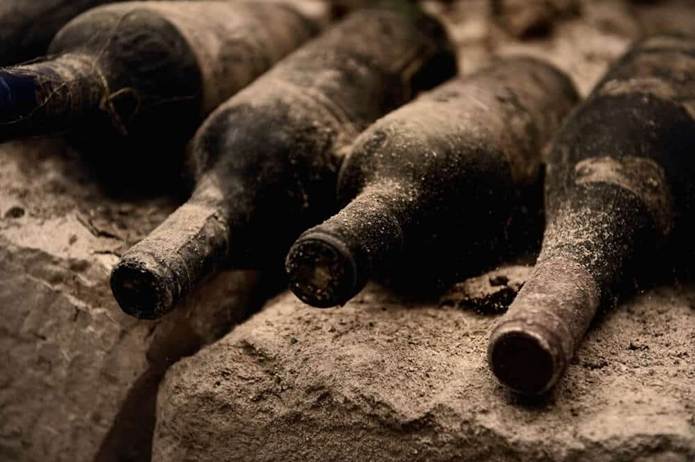
Photo courtesy of Ultra Wine Racks.

And when we do, we often seem to remember that the wine tasted different at the winery.  We don’t have connoisseur-level taste memory, but we do have a sense of what we drank – and liked enough to buy – once before.  What’s in our glass back home somehow just isn’t the same.

Of course, that’s as it should be.  The wine we drank in a tasting room was, for the most part, recently bottled from a vintage at most three years before and more likely only two.  The mere fact that we put the wine down in our “cellar” gave it more time for the tannins to blend in and maybe for some sediment to drop out.  Age alone doesn’t make a wine great, but it does in many but not all instances, change it.  The wines we tend to value the most are the ones that sit longest, so change is expected.

There are other reasons for the difference between what we tasted then and now that are more psychological.  For one thing, it is rare that we buy the first wine we taste at a winery.  That one is likely to be a white, which we purchase and drink less frequently.  But the Sauvignon Blanc they often serve first at a winery primes our taste buds for the Cabernet Sauvignon or Grenache that we care about more greatly.  At home, we don’t often open more than the bottle we are going to have with dinner that night, so we only have the one taste in our mouths.  That doesn’t make it worse, just different.

Generally, that bottle at home is an accompaniment to a meal.  In the tasting room, wine is the star; it’s why we are there in the first place.  But when the bottle shares the table with, say, a roast beef there are several taste experiences vying for our tongues’ attention.  There are times when the wine steals the show, but the experience of that wine is different than it was back where we bought it.

Moreover, the meal that the wine accompanies changes our perception of its taste.  The California Cab or Italian Barolo is going to match up differently with a steak versus a pasta, for two examples.  That’s really a good thing and it’s why some people are so interested in wine pairing.  We’re less picky than other people, but we recognize that some bottles fit better with some meals than others.  The reverse is also true: The choice of food changes our enjoyment of the wine.

So don’t fret if the wine you remember so well from that tasting trip a few years ago isn’t exactly what you thought it would be.  Enjoy it for what it is at the winery and then again for what it is at your dinner table.
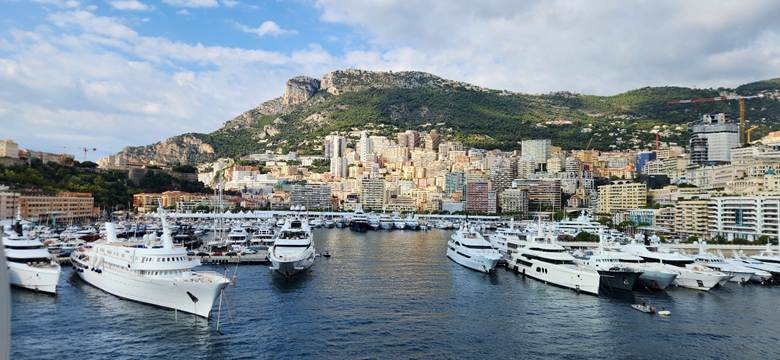
Monte Carlo

They don’t make wine in Monte Carlo, nor in the rest of Monaco as far as we know.  But nestled between Northern Italy and Southern France, there is plenty of winemaking all around it.  Monaco is a tiny enclave that would be relatively unknown if it weren’t for the fact that their prince married a glamorous Hollywood star. That was 70 years ago, and people still haven’t gotten over it.  The cathedral, not one of Europe’s finest, is visited frequently just because they were married there.

Today, Monaco’s lax tax requirements attract superstars of sports, film and finance.  The people who actually work there generally commute from France.

Monte Carlo and its yachts.

For a visitor who would like to do more than gamble, Monte Carlo does have its attractions.  The port is full of eye-popping yachts, undoubtedly owned by the aforementioned tax evaders. We believe a few oligarchs also take advantage of berthing there.  As a typical visitor, all you can do is look and envy for a little while.

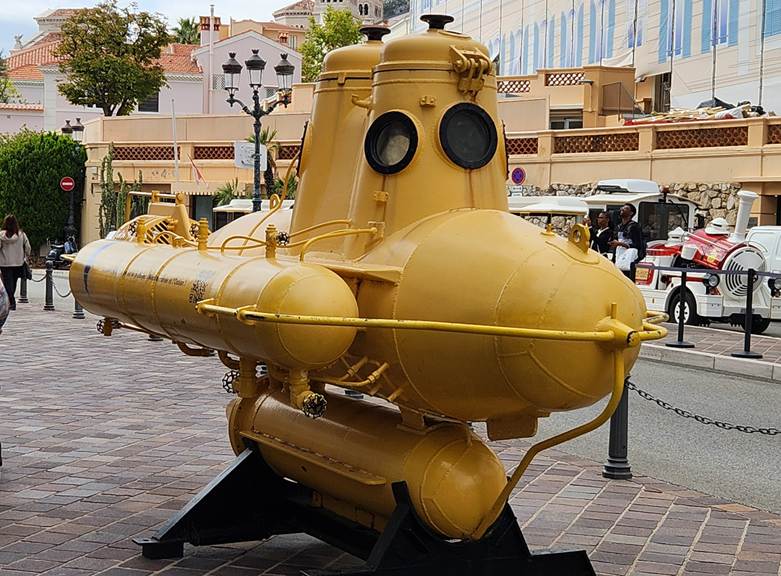
The Yellow Submarine in front of the Monaco Oceanographic Museum.

Monte Carlo is a center of the study of oceanography, dating to 1910 when the then Prince Albert became interested in the oceans and founded the Oceanographic Museum that is still there in an ornate palatial building.  Even if staring at sea-related objects is not your thing, it is worth seeing the building, perched on a cliff over the Mediterranean.  Jacques-Yves Cousteau, famed for his voyages on the Calypso, was director of the museum for more than 30 years.  One fun tidbit for a visitor is the yellow submarine (yes, that Yellow Submarine) in front of the museum.

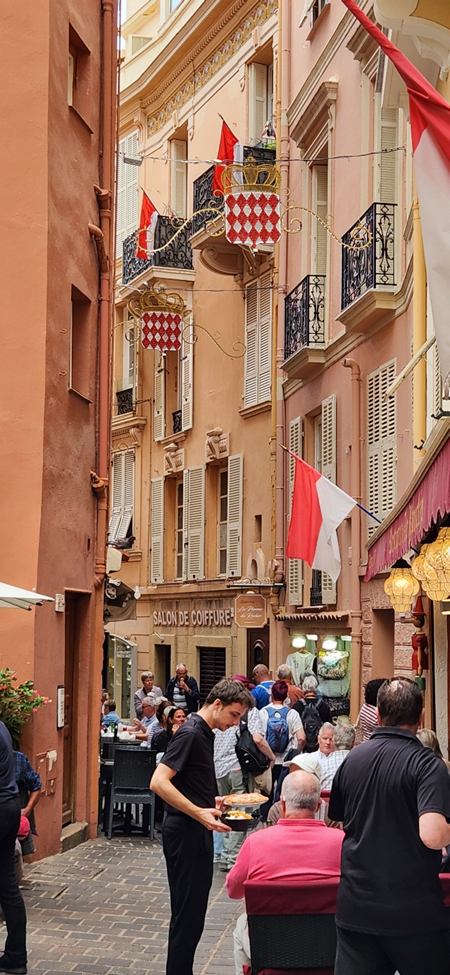
The narrow streets of Vieux Monte Carlo.

We particularly enjoyed the sector called Vieux (“Old”) Monte Carlo.  It is actually the historic town of Monaco, also known as Monaco-Ville or Le Rocher (the “Rock”).  The latter nickname is fairly evident given its perch above the city and sea.  The streets are quite narrow and are festooned with Monegasque flags and the colors of the Grimaldi’s the princely family.  There is pleasure in wandering around, stopping here for a coffee, there for a glass of wine or beer, and dining en plein air at one of the numerous cafés in the sector.

Of course there is the casino.  With gambling legalized in so many US states these days, the thrill of wasting money on the turn of a card is not so rare these days.  But there’s nothing in Las Vegas or Atlantic City to rival the Old World grandeur of the casino in Monte Carlo.  Baccarat has never been our thing, so once we went in and saw the beauty of the gambling den, we left.

Monte Carlo sits athwart the Italian and French Rivieras, which are reason enough to be in this part of the world…to say nothing of the vineyards inland.  If you happen to be in that part of the world, it pays to visit “the Rock”, if only to say you’ve been there.

G&C Lurton Vineyard

We were spending a day tasting wine in the town of Healdsburg in Sonoma County.  We often take a day away from driving through vineyards to take advantage of the tasting rooms (and restaurants) in town.  As we walked along Healdsburg Avenue, the main drag there, we spied an awning advertising the names Ehret and Lurton, obviously a tasting room for two labels just below.

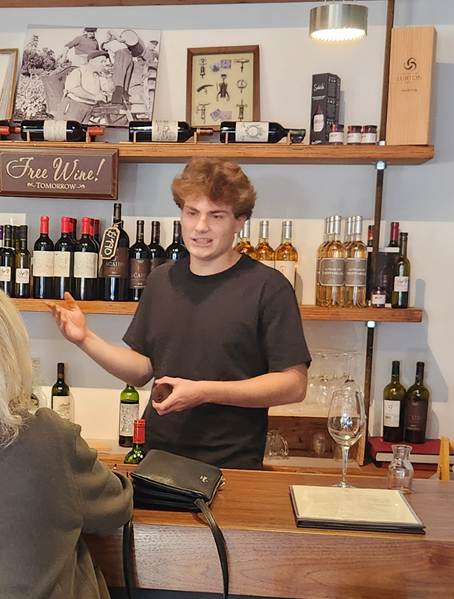
Jean-Joseph explains the wines at Lurton.

Ehret meant nothing to us, but Lurton did (well, might have). G&C Lurton makes some classified wines, specifically Dufort-Vivens, a second growth Margaux and Haut-Bages Liberal, a fifth growth from Pauillac.  Were they actually offering tastes of these notable wines in the heart of California viniculture?  Indeed they do…and more.

The explanation begins back in France.  Gonzague Lurton (the G in G&C) decided to make American wine that would represent a combination of California terroir and Bordelais winemaking skill.  He purchased land in Chalk Hill, just south of Healdsburg, and planted Bordeaux grapes there and called his vineyard Acaibo.  He then decided to open a tasting room featuring his wines from both his growing locations.  Tastings are also available at the vineyard, but we haven’t taken advantage of this.

Gonzague and his wife Claire (who also has a long history in winemaking) induced their nephew, Jean-Joseph Cogombles to work in the tasting room.  Thus it came to pass that we were served both Bordeaux and Sonoma wines by a family member.  Jean-Joseph is a young man who is surely destined for a life in wine; we found his wine knowledge to be at the sommelier level.

The tasting room is spacious, with tables scattered around it.  There is also a bar at the back, and that is where we sat on a slow day (we were the only tasters present) and enjoyed the wines Jean-Jospeh served.  Frankly, we preferred the French wines more, but it wasn’t a fair competition.  Top tier Bordeaux is going to have an advantage over relatively newly planted American vines.

But the contrast was worth exploring.  The Acaibo wine we tried was lush and aggressively forward, as befits a California Bordeaux blend (Cabernet Sauvignon, Cabernet Franc and Merlot).  Let’s say simply that it has potential.  Interestingly, the name Acaibo is a term in the local Native American language for three waters, mirroring the three grapes.

A visit to G&C Lurton in Healdsburg is not a typical Sonoma County tasting experience.  We got to use our French, though Jean-Jospeh speaks clear if accented English.  The opportunity to compare a famed winemaker’s products from two distant parts of Wine Country side by side is unique.  We would certainly return on another trip to Healdsburg.

Oh, and about Ehret.  They’re a Knights Valley winery with a bar of their own at right angles to Lurton’s.  We never got to taste their wines but may on another occasion.