How to Say “I Don’t Like It”

One of Power Tasting’s founding principles is to help readers avoid being intimidated when they go wine tasting.  Most servers in most wineries try to be friendly and conversational, so they shouldn’t intimidate anyone.  Still many tasters, especially inexperienced ones, find it very difficult to express their opinions when they find a wine they are tasting to be not to their tastes.

Simply put, they don’t feel comfortable telling a server that they don’t care for a particular wine they have just been served.  We’ve been raised to say, “please” and “thank you” and to avoid saying anything negative when someone is being kind to you.  So in an effort to be kind, some people wind up unnecessarily swallowing beverages they don’t like.

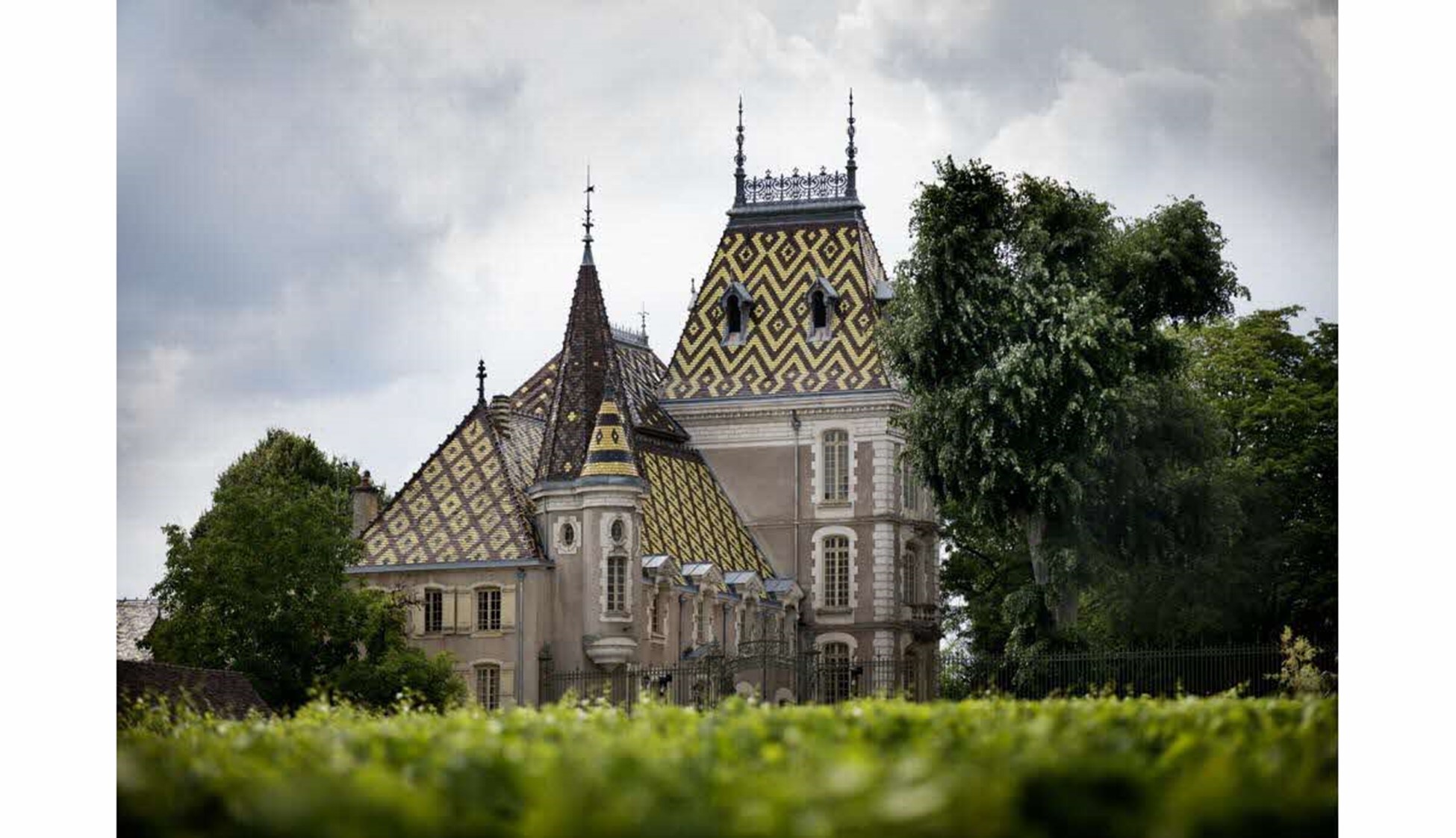
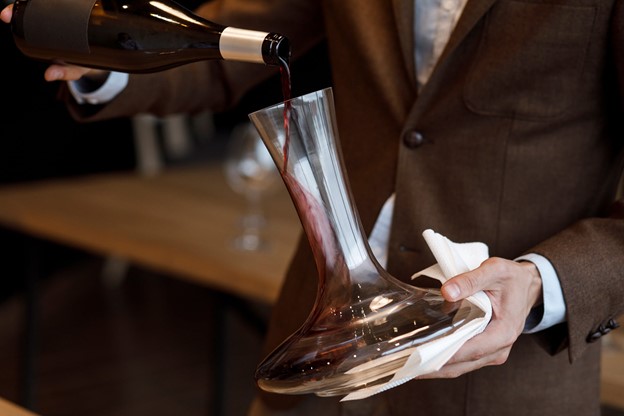
Photo courtesy of Food and Wine.

Here are some tips for expressing yourselves firmly but politely.

  • Say nothing. Another of the maxims we’ve been brought up with is, “If you have nothing nice to say, say nothing”.  This is the easiest and least confrontational way of indicating you don’t like a wine.  That’s what the pour bucket is there for, after all.  That leaves you with an empty glass in front of you and lets the server know that you’re ready to move on.
  • There are a lot of terms that aren’t “no” but are recognized as, at best, faint praise.  “Oh, that’s an interesting wine” is one way to say it.  “Unusual”, “different” and even “trendy” can serve the purpose.  For the most part, servers won’t ask you why you feel that way, but if they do, you can always say, “Well, based on my experience…”.  Nobody can argue with that, even if you have next to no experience.
  • Be comparative, not absolute. You don’t need to be negative.  You can simply say, “I liked the other one better”.  And that may actually be the case.  If a particular winery has several Pinot Noirs, for example, you can ask the server to line several of the tastes up side-by-side.  That way you can talk about your favorite and avoid mentioning the one you couldn’t stand.  (Of course, this doesn’t work if you didn’t like any of them.)
  • Devise a code. Assuming you’re traveling with a companion, you can figure out some code words that express displeasure.  For example, “That wine has a hint of cinnamon”, which isn’t a frequently encountered taste.  You’ll both know that that word really means “Ugh”.  Of course, if you do taste cinnamon, you’re stuck in discussing it.
  • Think about why you don’t like it. Saying that a wine is more acid than you like, or too tannic, or too green isn’t saying the wine is bad.  It can also help the server point you towards a wine that is more to your taste.  Maybe there was a different blend of grapes in the 2018 than the 2019 and you’ll have the chance to compare and find you actually like one more than the other.

Or you can just ‘fess up and say, “Sorry, it’s not for me.”


Tasting Sauvignon Blanc

A few issues back we discussed  Pinot Noir Tasting.  That was supposed to be a one-off, because that grape is so ubiquitous and yet so different as you traverse Wine Country.  Then we thought about Syrah.  So we at Power Tasting decided to make a new series, investigating wine tasting from the perspective of different varietals.

We have often experienced tastes of Sauvignon Blanc as the first offering on any given California winery’s tasting list for the day.  To be honest, it’s not our favorite, but what are we supposed to do when a nice server just puts a glass of it in our hands as we walk into the tasting room?  For the most part, California winemakers tend to favor very fruity Sauvignon Blancs. Maybe too much so, in our opinion, so we tend to dismiss wines made from those grapes.

Sauvignon Blanc grapes.  Photo courtesy of the Wine Institute.

Now, it’s not that we never buy or enjoy California Sauvignon Blancs.  We enjoy Dry Creek Vineyard’s version on hot summer days and Robert Mondavi’s all year long (except they call it Fumé Blanc).  If that were all there were to it, we’d consider these wines pleasant pastimes, but nothing to take seriously.

Our mistake.

Sauvignon Blanc has such a different character in France (or really, multiple characters) that it’s hard to recognize French wines made from that grape as being related to their California cousins.  Let’s start in the Loire valley, where Sancerre is as austere (almost to the point of sourness) as California Sauvignon is fruit-forward (almost to the point of sweetness).  For many people, Sancerre is the wine of choice to match the brininess of raw oysters, totally unlike any California Sauvignon Blancs.

The French do make things confusing, though.  Another widely popular Loire wine is Vouvray, but it’s made from Chenin Blanc.  And then there’s Pouilly Fumé from the Loire, which is Sauvignon Blanc and Pouilly Fuissé from Burgundy, which isn’t.   (It’s Chardonnay.)

In Bordeaux, Sauvignon Blanc is one of the two primary grapes in Sauternes.  (The other is Semillon.)  In this case, the wines aren’t almost sweet; they’re very decidedly honeyed.

Shriveled grapes to be made into Sauternes wine.  Photo courtesy of Winetraveler.

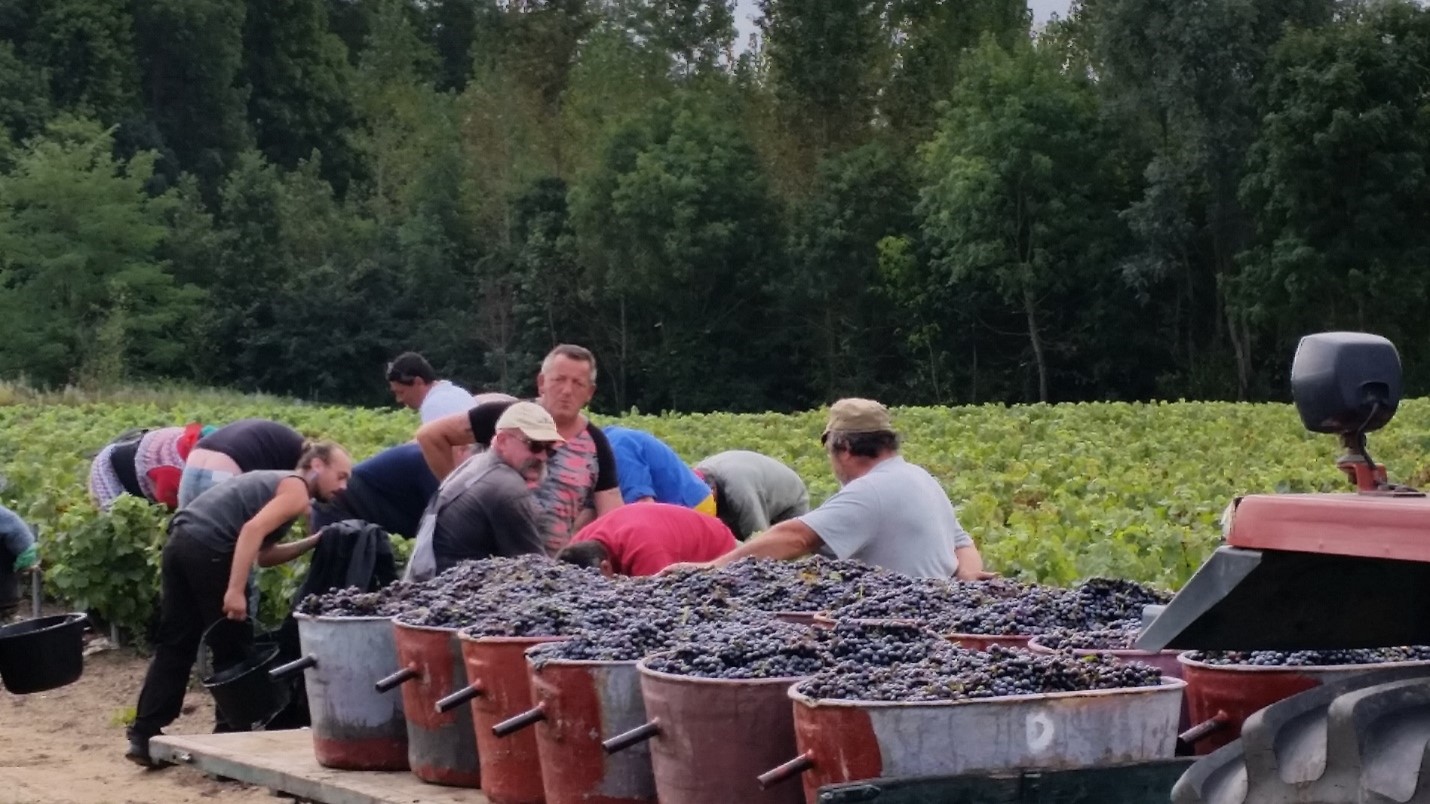
There’s nothing quite like wine tasting in the Sauternes region, which also includes the village of Barsac.  It’s a day spent drinking dessert.  The grapes aren’t as pretty; they’re all shriveled by the botrytis fungus that concentrates the sugars and adds an indescribable sensation to the taste of the wine.  But the castles and the grand châteaux are wonderful and the food is delicious.

In Italy, they make wine from Sauvignon Blanc all over the country, especially in the northeastern part, but they just call the grape Sauvignon.  Frankly, they’re not the white wines that Italy is famous for.

They are famous for Sauvignon Blanc in New Zealand, where we’ve visited but not had the chance to go wine tasting.  The Kiwi white wines are also very (maybe two very’s) fruit forward, the fruits in question often being citrus and pineapple.  These wines are not to everyone’s taste, but they certainly put New Zealand on the map of Wine Country, so that’s something to be proud of.

A little fruity, a lot fruity, maybe sour, definitely sweet.  That’s some grape, Sauvignon Blanc!


Château Fonplégade

As we have written previously, wine tasting in Bordeaux seems more than a little formal and stuffy for those of us used to visiting wineries in the U.S.  In that region of Wine Country, Saint-Émilion offers visitors the most relaxed experience.  The town itself is lively and welcoming and there are many wineries to visit without an appointment.  Nonetheless, if you want to try the wines of the top châteaux, you’ll need an appointment.

Photo courtesy of Wine.com.

One we have enjoyed is Château Fonplégade (www.fonplegade.com).  Its wines are grand cru classé.  That classé is important.  Any Saint-Émilion vineyard can call itself grand cru, but the classé must be awarded by the local wine authorities.  [The top top wines of Saint-Émilion are called premier grand cru classé.]  Of course, for a visitor, the only important thing is to taste good wine, and we have had that experience at Château Fonplégade.

Interestingly, it is owned and operated by American wine makers, Denise and Stephen Adams.  They also make ADAMVS, on Napa Valley’s Howell Mountain.  It seems that Denise is the one most actively involved at Château Fonplégade.  The couple haven’t Napafied Château Fonplégade but they have raised the quality of the wine enough to obtain the cherished classé.

Unlike what we generally find in California, the French vineyard makes only two wines: the namesake Château Fonplégade and a lesser second label, Fleur de Fonplégade.  (The couple also own the Château l’Enclos in Pomerol.)  And of course being from Saint-Émilion, the wines are a blend of Merlot and Cabernet Franc.  Another aspect that distinguishes Château Fonplégade is that their wines are made biodynamically, a trend becoming quite common in France (and in California too, for that matter.)

The cellars at Château Fonplégade.  Photo courtesy of The Wine Cellar Insider.

Bordeaux rules require that all the grapes of any vineyard must come from the contiguous estate surrounding the château. Therefore, the château itself is surrounded by vines, which seem to extend forever.  Some châteaux may be no more that humble farmhouses, but in Fonplégade’s case the building is an elegant 19th century structure, intended to project the wealth and taste of its owners.  That has always been the case, but the previous owners had let it run down a bit.  The Adams’ invested in upgrading not only the château wine making facilities and the cellars.

Also under the previous regime, Fonplégade welcomed tour groups.  That is no longer the case.  You must have an appointment and the visits are, in the winery’s term, intimate.  That shouldn’t scare away American visitors.  We have met Denise Adams and she is a very easy-to-talk-to person.  The team at Fonplégade takes on that personality.

As to the word: Fonplégade means “fountain of plenty”.  There is a 13th century fountain on the property that inspired the name.  It is still in use to moisten the vineyard in dry years.


Château de Chenonceau

There are many wonderful reasons to visit the Loire valley.  It’s close enough to Paris that you can make a day trip of a visit there.  For us wine enthusiasts, there’s Vouvray, Chinon, Sancerre and Muscadet to occupy our tasting hours.  Those wines go well with the Touraine cuisine (named after the central town of Tours).  And there’s the history, so much of it, best exemplified by the castles that line the river Loire and other streams nearby.

Photo courtesy of YouTube.

In the 15th and 16th centuries, French monarchs and nobles preferred to avoid the hoi polloi of Paris and so built magnificent châteaux from which they could both rule and enjoy themselves.  There are many to visit, including Chambord, Blois and Amboise.  If you only have the time to visit one, we recommend that it be the Château de Chenonceau.

You enter the grounds down a long allée of plane trees until, seeming suddenly, a fairy castle appears before you.  That’s the entrance to the château, where you can and should sign up for a tour, available in many languages including English.  A guide will show you around the rooms, point out some interesting information about the gardens and explain the history of Chenonceau.

The château that’s there today wasn’t the original.  That one was burned down and replaced by a nobleman in generally the form we see the front of it today in the early 16th century.  King Francois I seized it a few decades later.  His son, Henri II, set it aside as a love nest for his mistress, Diane de Poitiers.  This didn’t much please his wife, Catherine de Medici, so she kicked out Diane and expanded the château to cross the river Cher.  [As you tour Chenonceau, you can see two gardens out the windows.  One was Diane’s, the other one Catherine’s.  The mistress got the better of the gardening competition.]

Because the château spans the river, it was used by Jews and other refugees from German-occupied France during the Second World War.  The Cher was the dividing line between the Nazis and Vichy France to the south.  Escapees would enter the front of the château and sneak out the back.

Photo courtesy of The Local France.

Perhaps the most unique and certainly the most romantic aspect of a visit to Chenonceau is to rent a little boat and row along the Cher, under the château.  There’s no other castle in all of Europe where you can do that!

The architecture of Chenonceau combines Gothic and Renaissance elements, so viewing it is another way you can experience history there.  Most of the rooms in the château are decorated so you can give yourself a sense of how royalty treated itself in the early Renaissance.  As Mel Brooks put it, it was good to be the king.  Now, of course, Chenonceau is a historic monument.  Wars and revolutions have not dimmed the elegance and attraction of this great castle.  Other than Versailles, it’s the most visited château in France.  When you are in the Loire valley for wine tasting, leave yourself some time for castling, too, especially at Chenonceau.


Dining and Finding

As a rule, wherever you find great wine being made, you’ll find great restaurants.  This just makes sense – the people who spend all year making a beverage to serve with food want to eat it in restaurants.  And we wine tasting visitors get the benefit.  Naturally, you’ll find great wine lists in these Wine Country restaurants; it is often made just around the corner.

We recommend that you take advantage of these wine lists to broaden your knowledge of wineries to visit while you’re in the region.  But how do you choose?

As it says at Yountville’s Mustards restaurant, there’s way too many wines to choose from.  Photo courtesy of napavalley.com

  • Order the names you’re familiar with, but… Sure, you’ve heard of their Cabernet Sauvignon or Merlot, but did you know that they make a Pinot Noir?  Very often, restauranteurs feature lesser-known wines from top producers, specifically because they know that people aren’t familiar with them.  It builds a nice relationship with the wineries and gives the wine lists a bit of distinction.  If you try one and like it, you can drive over the next day and buy some.  Often these wines aren’t widely shipped, so this may be your only chance.
  • Order the names you’re unfamiliar with. Sometimes this means placing your trust in the restauranteur or sommelier, if there is one.  In big, well-known restaurants this may make the choice easy.  In a region you’re familiar with, you may know a lot of the names on the list.  But if you’re traveling to an area where you haven’t tasted very much, everything on the list may be unknown to you.

Photo courtesy of Chateau Ste. Michelle Wine Estates.

  • So ask. Invariably, the server or sommelier will in return ask you two questions: What are you ordering to eat?  What kind of wine do you like?  The wines on the list should be compatible with the menu, so just finding out which wines on the list match up with your tastes will help you plan for where you might want to visit the next day.
  • Order by price. There are occasions in which you don’t want to ask your server to help you choose.  Or if you’re overseas, you may not want to try your luck with the local language.  We’ve found it useful to determine how much we want to pay for a bottle that evening and then choose from the list accordingly.  Sure, there’s an element of luck involved, but if the restaurant has a well-chosen list, your chances are pretty good.
  • Order by the glass. If nothing else, this will minimize your financial risk.  If you don’t like a wine you’ve chosen, you won’t have spent a lot on it.  The choice of these wines is generally limited and the quality less than wines by the bottle.  But it’s also a way to take a quick wine-tasting trip around the region, without getting out of your chair.
  • Be prepared for success…and disappointment. Over the years, we have had some great finds in Wine Country restaurants.  There are instances in which we subsequently visited the wineries, bought the wines and continue to do so.  But there have been some occasional duds. But at least we learned what to avoid in our wine tasting adventures.

California’s Route 101

There are some fabled roads in America.  You can get your kicks on Route 66.  Ten cents won’t even shine your shoes on Broadway.  42nd Street is naughty, haughty, gaudy and sporty.  There are no songs about California’s portion of US Route 101.  It runs mostly south-north from Los Angeles through San Francisco all the way to the state border and up to Seattle.  Interstate 5 runs parallel to it and it’s much faster.  The Pacific Coast Highway is much prettier.

Map courtesy of MapQuest.

But if you want to be serious about wine tasting in California, at some point you’re going to deal with Route 101.  It is the main stem for almost every wine making area in the state, with the very notable exception of Napa Valley.  It will take you to Santa Barbara, Santa Maria, Paso Robles, near to Monterey, and Sonoma County.  If America had a route des vins, this would be it.

As you drive north, you have the Pacific Ocean on your left and the mountains on your right.  Mostly you can’t see the ocean; take the pacific Coast Highway if that’s your objective, but be prepared to crawl through towns.  But you can see the sea for a while as you approach Santa Barbara.  Around Pismo Beach, Route 101 skirts the coast along some rather impressive cliffs.

The road heads inland through as you get to Paso Robles where, surprisingly, the mountains appear on your left.  Route 101 divides the vineyard areas of Paso Robles.  On the west side, in those mountains (well, maybe they’re just foothills at that point) are the artisanal wineries that have raised this region’s reputation.  On the left are the mass production vineyards: endless, endless vistas of vines.  There are some quality vineyards these days on the east side of Route 101, but if you’re driving through you are overwhelmed by the quantity.

As you get closer to San Francisco, the endless vista is brutally modernistic office buildings in Silicon Valley, followed by the dreary traffic from the airport to the city.  Then, suddenly, the highway disappears and you are on city streets.  Use your GPS or your roadmap because it will take you to an American legend, the Golden Gate Bridge.  If the weather is good, you will offer you a glorious view of the City by the Bay.  If that famous fog rolls in, you’ll just have to take it on faith that the city is still there.

Once over the bridge, you’ll soon come to Sonoma County and one wine tasting region after another.  Petaluma and the Green Valley.  Santa Rosa and the Russian River.  Windsor and the Alexander Valley nearby.  Healdsburg and Dry Creek.  It’s not that you can spend days there; you can spend years visiting Sonoma County and you won’t see it all, because it changes all the time.

You can keep going and find more vineyards, but if you’ve made it from Santa Barbara to Healdsburg, you’ve seen the best of the Route 101, in terms of wine tasting, anyway.  Maybe they should write a song about it.


Tasting Syrah

The Syrah grape is ubiquitous.  It originated in ancient Persia, around 4,500 years ago, according to archaeologists, in the region that now contains the city of Shiraz.  And indeed, some wines made from the grape are still called Shiraz.  It is now grown in France, mostly in the Rhône valley and the Languedoc.  You’ll find it in California, especially in the Central Coast.  It is a primary grape in Australian wines (where they call it Shiraz) with the center of production in the Barossa region.

We were first introduced to Syrah many years ago, when traveling in abroad.  Some Aussie blokes we knew gave us a glass of Oxford Landing Shiraz.  At that early stage of our wine tasting education, red wine meant Cabernet Sauvignon and nothing but.  So our first reaction to this glass was that there was something wrong with the wine.  But it wasn’t sour; it didn’t taste bad.  It was just different.  This was a wine tasting epiphany!  Oxford Landing is a mass production wine and we’ve had many better Syrahs since then, but that first one has never been forgotten.

Syrah grapes. Photo courtesy of Banfi Wines.

One part of that experience still rings true: Syrah is different.  Sometimes it’s a deep, dark wine that goes with roast beef.  California’s Darioush winery makes wine like this.  (The founder is of Iranian descent and calls it Shiraz.)  Others are lighter and can accompany chicken or pasta.  You just can’t tell until you taste.

Syrah is the primary grape of the Northern Rhône.  Wines from Cornas must be 100% Syrah and it is central to most of the other wines of the region.  There’s plenty of depth in these wines but there is also a notable acidity.  As we have gone wine tasting in the Northern Rhône, we’ve been surprised at how notably acidic some of the wines are, especially those we tasted at Cave Yves Cuilleron.  Of course, acidity is a good thing in wine; no complaints, we’re just noting the difference.

There’s plenty of Syrah grown in the Southern Rhône and the Languedoc, where it is generally blended with Grenache and other grapes.  Blends are the rule for AOC-denominated wines, so single varietal wines from the region are marked as IGP (Indication Géographique Protégée) or VdP (Vin de Pays).  When you can taste the full varietal character in the southern regions, there is often a note that the locals call garrigue, the scrubby vegetation that grows along the hillsides with some flavors of rosemary.

California’s Central Coast makes Syrahs that are fruit bombs with way over-the-top alcohol levels. Sometimes we call those “chewy” wines.  In general, Syrah likes warm weather but the heat of the Central Coast really pumps up the sugar, which in turn becomes alcohol.  The Syrahs in the Napa/Noma area tend to be mellower, though still on the deep end.

They grow more Shiraz in Australia than any other grape, and the wines tend to be big and sunny, which brings us full circle back to that first glass.  The point of this round-the-world Syrah trip is that you never know what you’re going to get when you first taste a Syrah.  Big and bold, lighter and acidic, punchy and alcoholic, open and herbal – they’re all the same grape, but not the same terroir, not the same winemaker.

So when you travel for wine tasting, be prepared for something different, whenever they offer you a Syrah.

Tamber Bey Vineyards

Tamber Bey (www.tamberbey.com) is a unique experience for visitors to Napa Valley, one that hearkens back to the valley’s past.  Where today there are vineyards, restaurants and resorts not that long ago were orchards and ranches.  Tamber Bey combines the owner’s interests in both wine and horses.  The winery and tasting room are located at Sundance Ranch, where you can not only taste wine but also enjoy their horses.

In another article in this issue, we talk about discovering wines at dinner and following up with a visit thereafter.  We first discovered Tamber Bey on a small, eclectic wine list where we knew none of the wines.  The Cabernet Sauvignon was powerful and rich in the mouth then (and still is), so we drove over to see what else they had.  What we found was a ranch house (now a tasting room) with a large area behind it where visitors can lounge and horses can be stabled.  There were no vines to be seen.

The tasting room is made of wood, as is the entire location.  There’s a large bar with enough space for a dozen or so visitors to be comfortable.  We don’t think it was ever meant to be a destination for busloads of wine tasters.  If that were to occur, there’s plenty of room out back for them to sit, wander and enjoy their wine.  So when you go to Tamber Bey, try to avoid a rainy day.

Service at the bar is unusual, at least one day that we were there.  One of the servers was a fellow who we had come to know at another winery.  The other one was the Tamber Bey’s owner, Barry Waitte, who made his first fortune in information technology.  We hardly guarantee that Mr. Waitte will be pouring you some wine when you visit, but it could happen.

Tamber Bey has three levels of wine.  There’s the Vineyard Series, made from grapes grown in their vineyards in Oakville and Yountville.  Their best wines are in the Signature Collection, including Chardonnay, Pinot Noir, Malbec, Cabernet Sauvignon and a Bordeaux blend they call Vermejo.  All but the Pinot Noir are estate grown.  Finally, they have introduced a second label called Three Steeds.  (There’s a lot about horses here.)  Usually second labels are inferior to the proprietary label, but that doesn’t seem to be the case with Three Steeds.

About the horses: Mr. Waitte does own some fine Arabians, but the purpose of the Tamber Bey stables is to care for rescue horses that have been mistreated elsewhere.  We’re not horse people, but that seems like a pretty noble endeavor to us.

For the most part, Tamber Bey’s wines are powerful, with a great deal of alcohol in the reds.  This may not be to everyone’s taste.  Keep this in mind if you are likely to visit Tamber Bey after several other stops.

There is no place in Napa Valley, or for that matter anywhere in Wine Country, quite like Tamber Bey.  So come for the ranch ambiance and the horses and have some wine while you’re there.

Kunin Wines

From a wine tasting perspective, Santa Barbara has a split personality.  Uptown is all elegant hotels, fine restaurants and well-appointed tasting rooms.  Downtown, near the Pacific Ocean, is what they call the Funk Zone, which is all, well, funk.  This is not to say that there isn’t good wine to be had in the Funk Zone, just that the overall ambiance is not quite like anywhere else we have ever seen in Wine Country.

The Kunin tasting room in Santa Barbara’s Funk Zone.  Photo courtesy of hotelcalifornian.com.

Right in the middle of the Funk Zone is Kunin Wines, which has identity crisis of its own.  Not a crisis, really; Kunin seems to be quite comfortable with its identity.  But it’s a little different than other Santa Barbara wineries.  For one thing, perhaps the most important, there’s the wine.  Santa Barbara is Pinot Noir and Chardonnay country.  Kunin primarily makes Rhône-style wines from grapes as diverse as Grenache (red and white), Syrah, Viognier, Mourvèdre, Cinsault, Roussanne and Counoise.  That’s quite a selection for an American-owned winery in southern California.

A quiet time at the bar at the Kunin tasting room.  Photo courtesy of Keepin’ It Kind.

We’ve found that the servers are quite liberal with offering a variety of tastes if you show genuine interest, not just a desire for alcohol.  But then there’s the matter of Kunin’s identity crisis.  Up until around the lunch hour, visitors can sit at the bar, taste, discuss and enjoy in a thoughtful and unhurried manner.  But once the afternoon arrives, so do the partiers.  And we do mean PAR-TEE.

The tasting room is in a building of no particular architectural interest.  But there’s a long front porch, a wide-open door and a large rectangular bar.   Just perfect for wine tasting near the beach.  And so later in the day it becomes packed – bar, porch and street front and the crowd didn’t seem to be involved in a conversation on the relative merits of real Rhône wines and California varietals.

Now we have nothing against parties.  Who doesn’t like a good party?  It’s just that when we drink wine at a party, we expect it to be cold, wet and alcoholic, nothing more.  But Kunin makes serious wine and it’s a shame not to enjoy it on its own terms.  Don’t misunderstand; these are California Rhône-style wines, not imitation anything.  They cannot be confused with wine made in the south of France, nor should they be.

For example, Kunin makes two wines they call Pape Star and Pape Star Blonde.  They’re meant to be a “versatile take on France’s Châteauneuf-du-Pape”.  A take, perhaps, but hardly to be confused with the real thing.  From our point of view, they would be better off calling these wines simply California Rhône Blends, both red and white.  Drinkers should appreciate them for what they are, not what they aren’t.

We were several decades older than any other people in the tasting room and so maybe younger people will experience Kunin differently than we did.  Whatever your age, Kunin is worth a visit.

California’s Central Coast

It is meaningful to say that you are visiting a specific area of Wine Country.  You don’t say, “We’re going to France for wine tasting”.  It’s too big and too varied, so you might say Bordeaux or Burgundy.  California is very large and varied as well, so you say Napa Valley or Sonoma County.  But if you say that you’re going wine tasting in California’s Central Coast, you’re covering an area so vast that it’s hard to say anything meaningful at all.

It’s more than 300 miles from Santa Barbara to Alameda County, the southern and northern extremes of the Central Coast.  Some AVAs are well established; they’ve been making wine in and around Santa Barbara since the days of the Spanish colonization.  Other areas have only recently realized that excellent wine can be made from grapes grown on their soil.  For instance, there have only been vineyards in the Santa Lucia Highlands since the 1970’s.  So let’s take an abbreviated tour up the coast.

  • Santa Barbara is a delightful little city, with many excellent hotels and restaurants. There’s no wine grown inside the city limits, of course, but many excellent wineries have tasting rooms there.  Many of the wines come from the nearby Santa Rita Hills.  Pinot Noir is THE grape of this area. (Chardonnay is grown everywhere on the Central Coast.)  We’ve been particularly impressed with Sanford and Au Bon Climat.

The Bien Nacido vineyard in the Santa Maria Valley is renowned for its Pinot Noirs.  Photo courtesy of the Santa maria estate.

  • A little further north is what we consider to be the heart of the Central Coast, around Los Olivos and Santa Maria. These were relatively quiet little backwaters until they were popularized by the movie Sideways.  Even so, until recently they were rather bucolic but have recently become somewhat more “Napa-fied”, to coin a phrase.  Still, there are many excellent wineries to visit and wines to sample.  Favorites of ours are Foxen and Beckman.  Pinot Noir and Syrah are the leading grapes.
  • The San Luis Obispo region is coming on quickly, both in terms of the quality of the wines and its popularity for visitors. But SLO is not close to any of California’s major population centers.  For example, it’s four hours drive from San Francisco; the problem with hidden treasures is that they’re hidden.  We’ve enjoyed wines from Alban and Laetitia.  Pinot Noir is strong here but Rhône style wines are really the San Luis Obispo success story.

Downtown Paso Robles has become quite trendy.  Photo courtesy of pasoroblesdownton.org.

  • Paso Robles is far enough from San Francisco to be far and close enough for a visit to be feasible. The west side of Route 101 is known for very large commercial wineries.  The east side is hillier and home to many artisanal winemakers.  Tablas Creek (our favorite) introduced Rhône grapes to the region, but Paso Robles is still known for powerful Zinfandels.
  • There are some wineries to visit in the Santa Lucia Highlands, but most of the tasting is in Monterey. Look for robust Pinot Noirs here, such as Hahn or Pisani.  The beauty of the overall scenery around Monterey is world famous.
  • Finally, in the area around Silicon Valley you’ll find quite a few wineries, but not as many that earn top marks. What was once fruit trees, ranches and vineyards is now mostly office buildings where the world’s technology is invented.  Nonetheless, we were delighted to discover the Pinot Noirs of Testarossa in this area.