We never studied geology in school. It just seemed boring: rocks, rocks and more rocks. Okay, it’s a noble science but it wasn’t our thing. So we guess we missed the lessons about how the type of soil affects the taste and aroma of wine. The lectures would have been okay; but we’re really sorry not to have done the lab work.
Now, when we go wine tasting, we don’t get down on our knees and run our fingers through the dirt. Since we skipped the class, we wouldn’t know what we were looking at anyway. But we have learned that there are some general characteristics of certain soils in different regions – or within a region – that differentiate one wine from another. It’s not that one is better or worse than another, which is a matter of taste, but it adds to our pleasure in tasting wine to know where it came from.
If you’d like, here are some tips.
- Get the lay of the land. Start with understanding that softer soils produce softer wines and stonier, harder ones have more flavors that come from the rocks. Limestone and chalk are in the ground beneath the vines of Champagne; is there any softer wine? Sandy soil or sandstone creates lighter colors and less tannins. At the other extreme, where once there were volcanos, or where pressure created schist or slate, wines are dense and contain a lot of mineral and fruity flavors.
- Find out what kind of soil is predominant where you are going. For example, the land south of the city of Bordeaux is full of gravel (hence the wines are Graves), which is little stones. To the east, clay and limestone predominate in the soil of St. Emilion. Think about it: Which of those wines are softer on the palate? In St. Chinian, the vineyards to the north are made of schist and are big and bold, while those to the south are of limestone and are much softer and rounder. California is big, so there are a lot of different types of soils. But in the prime locales of Napa Valley and Sonoma County, it’s likely to be rocky on the hillsides (naturally) and sandier in the valleys. For those who can distinguish between mountain and benchland wines, that’s a big part of the reason.
- Ask your server. In many countries in Europe, there are rules about what you can grow, where you can grow it and which grapes can be used are very strict. So the soil will be very specific to individual vineyards. American winemakers have more latitude. Many California wines, for example, are made from single vineyards and it’s interesting to know what the underlying soil is like. Even more so, when winemakers blend juice made from grapes grown in different vineyards, they are trying to balance exactly the tastes and aromas of the different soil types. Your server ought to know how the soils affect the wines. If he or she pleads ignorance, try to get an answer from someone more knowledgeable.
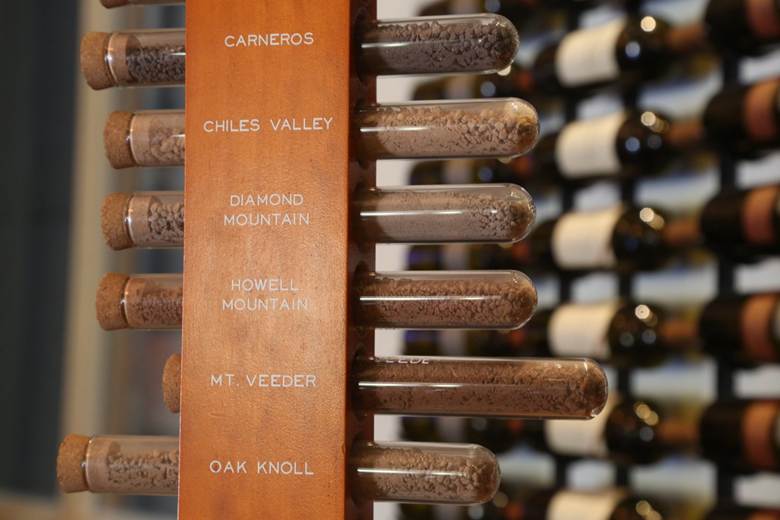
- See if there’s a soil display. Many wineries, in California and elsewhere, have displays of the different types of soil where they grow grapes. Take advantage of it and try to make the connection to the wines you taste. Again, a server who is an educator should be able to help you understand.