Like many Americans who enjoy wine tasting, we remember a time when we only went to Napa Valley. Of course, wine was being made in other parts of California but we never heard about those places. We’d been traveling to Napa Valley for at least a decade before we made it to the other side of the mountain, to Sonoma County.
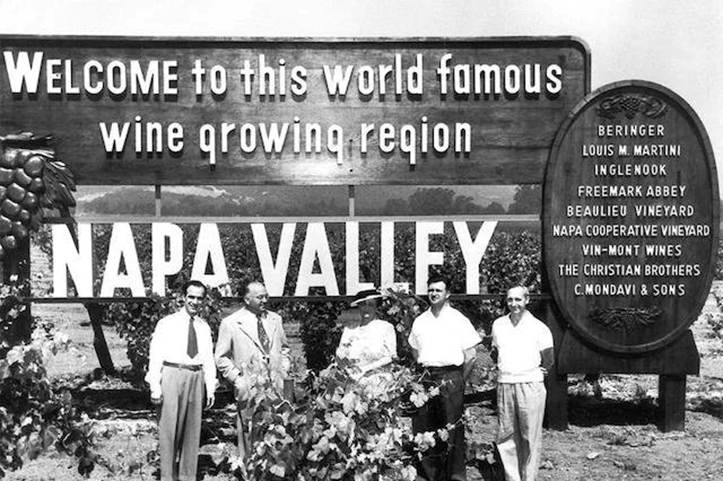
We didn’t know it then, but we were being served wine by men and women who were creating an industry, yes, but also a lifestyle and artistry in making quality wines. We are sure that we were served by Louis M. Martini himself. Was that Warren Winiarski at Stag’s Leap, Mike Grgich at Grgich Hills, or Charles Wagner at Caymus? It’s too long ago to remember for sure, but it might well have been.
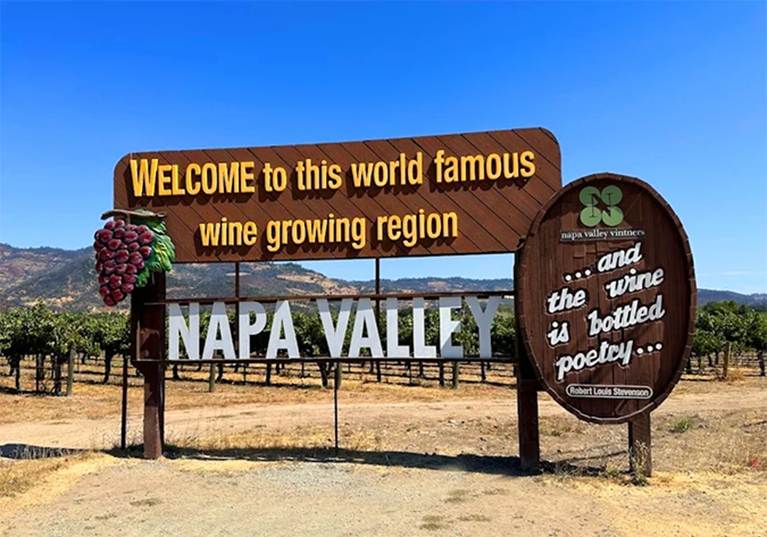
Wine was poured into tiny glasses (that we got to keep) and it was free. From the producers’ points of view, wine tasting was advertising. They thought that a happy sipper would turn into a contented buyer, and this proved to be true.
The pioneers are all gone now, and for the most part their vineyards have been bought by international corporations. To the degree that our taste memories are accurate, Napa Valley wines, led by Cabernet Sauvignon, are just as powerful as then, but have a little more finesse. Have they really changed or is it our faulty memories? We’ll never know.
What we do know is that wine tasting in Napa Valley has become more formal, sitting at tables instead of standing at bars, with servers who are far removed from the cultivation of grapes and the creation of wine. And it costs a lot more. Wine tasting experiences are richer, with architecture, design and education almost as important (in some cases, maybe more) as the wine. Tastings last at least an hour, often more, instead of quick sips, thank you and goodbye, as in the past.
We see a few possible futures for wine tasting in Napa Valley. It may become an avocation that only the rich can enjoy (or maybe it has already happened). Prices will remain high and appointments will become even more mandatory. This has certainly been the recent trend, especially since the pandemic.
Another trend, which is already apparent in some wineries, is a two-tier experience. The best wines will be served to those willing or able to pay the high prices. For a lower but not negligible fee, people will be offered sips of lesser quality wines, often at a bar instead of a table.
The worst possibility is that the trend towards snob-appeal will drive enough people away that vineyard owners abandon wine tasting, except on a very exclusive basis. It would not be the first industry that misunderstood its market and shriveled. Ask the people at Kodak, Nokia and Blockbuster; they’ll tell you what can happen if producers misread their customers.
Of course, we hope that wineries in Napa Valley flourish and continue to make excellent wines. We just hope that they make wine tasting more approachable.